gallery · 87 circuits
Circuits you can open and run.
Every circuit here loads onto the live breadboard with one tap — flip its switches, swap its parts, break it, save your own version. The library is curated; the rest were shared by builders like you.
The library
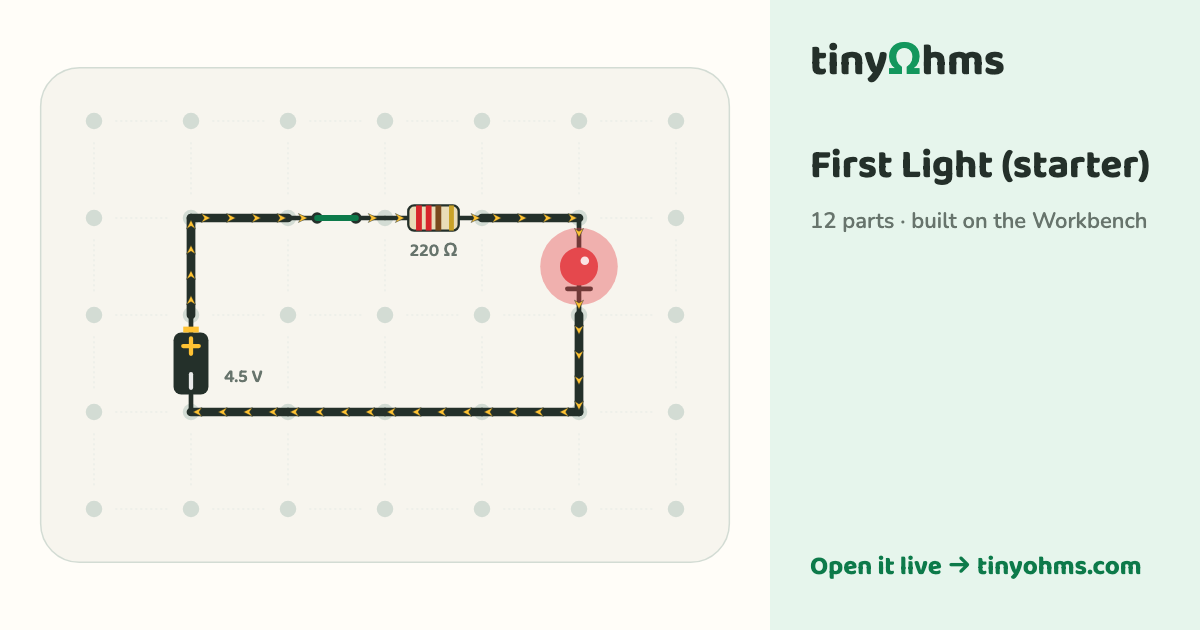
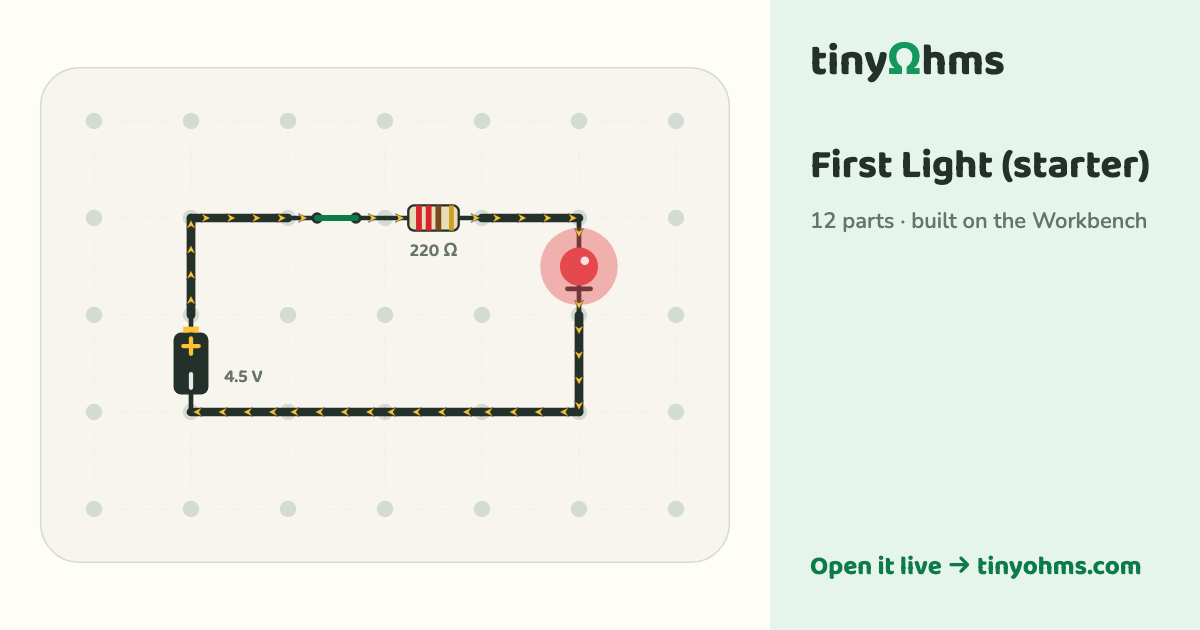
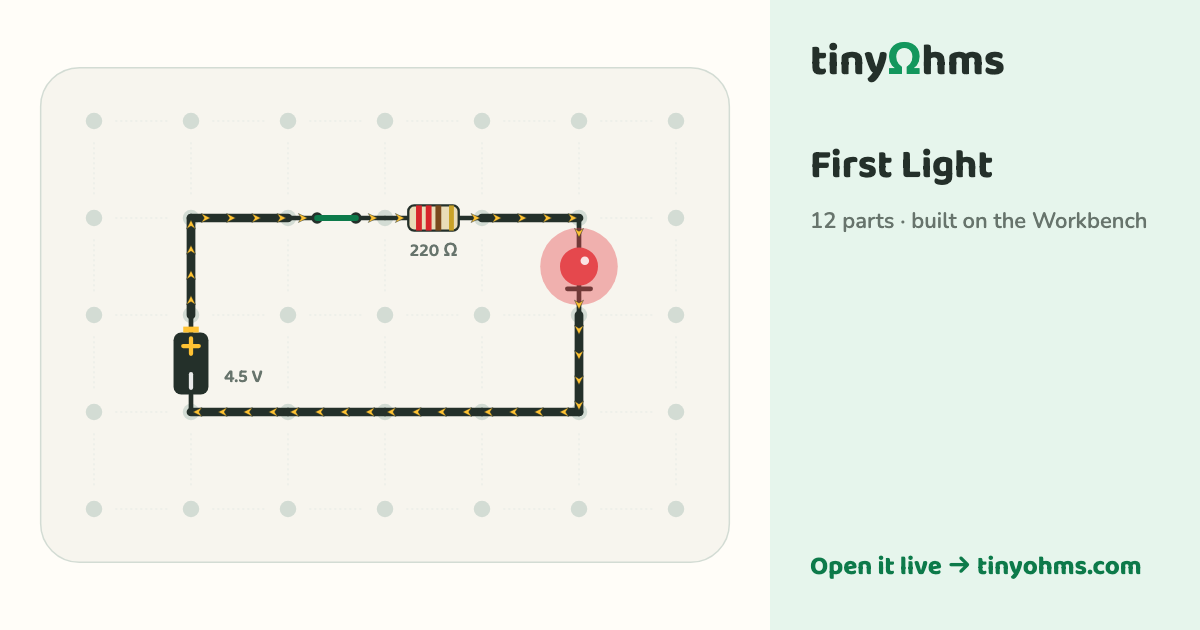 First Light
A flashlight. Tap the switch to open and close the loop.
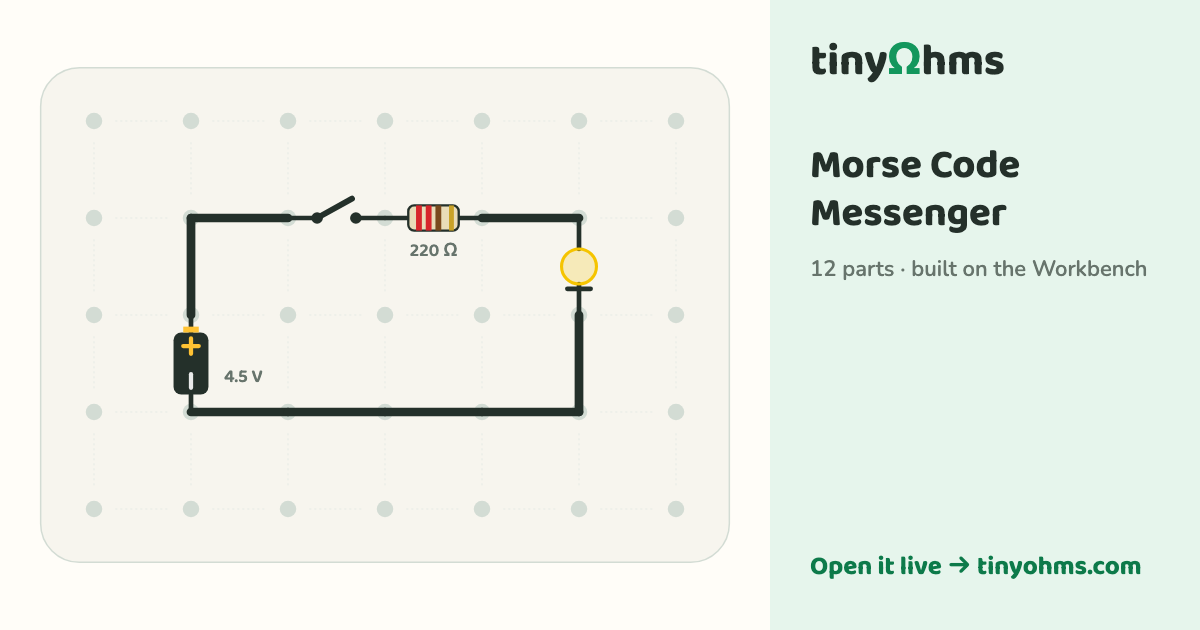 Morse Code Messenger
Key up, LED dark. Tap the switch to send dots and dashes.
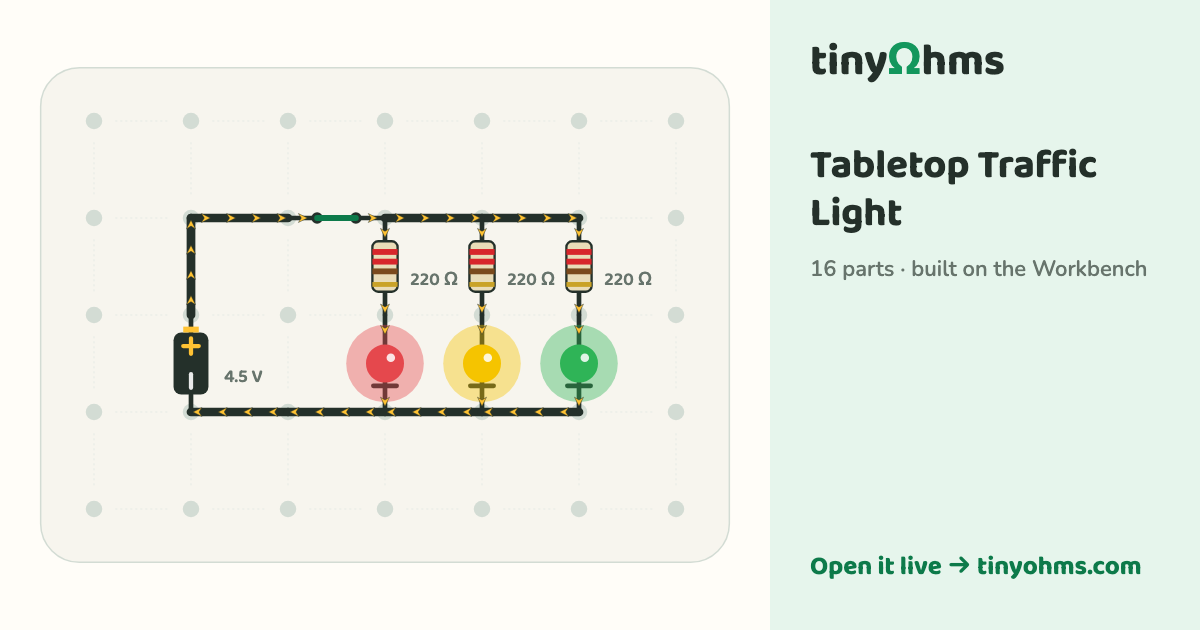 Tabletop Traffic Light
Three LED lanes in parallel, all lit together by one switch. For the sequence, see Traffic Light Sequencer.
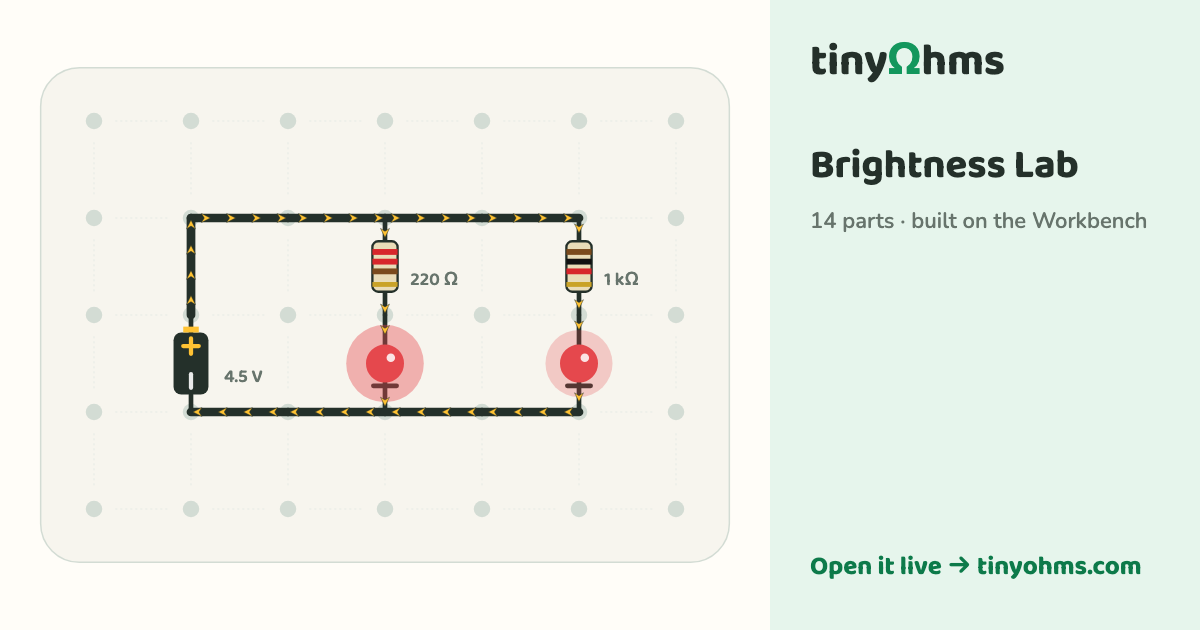 Brightness Lab
Two lanes: tap lane B's resistor to cycle values and compare.
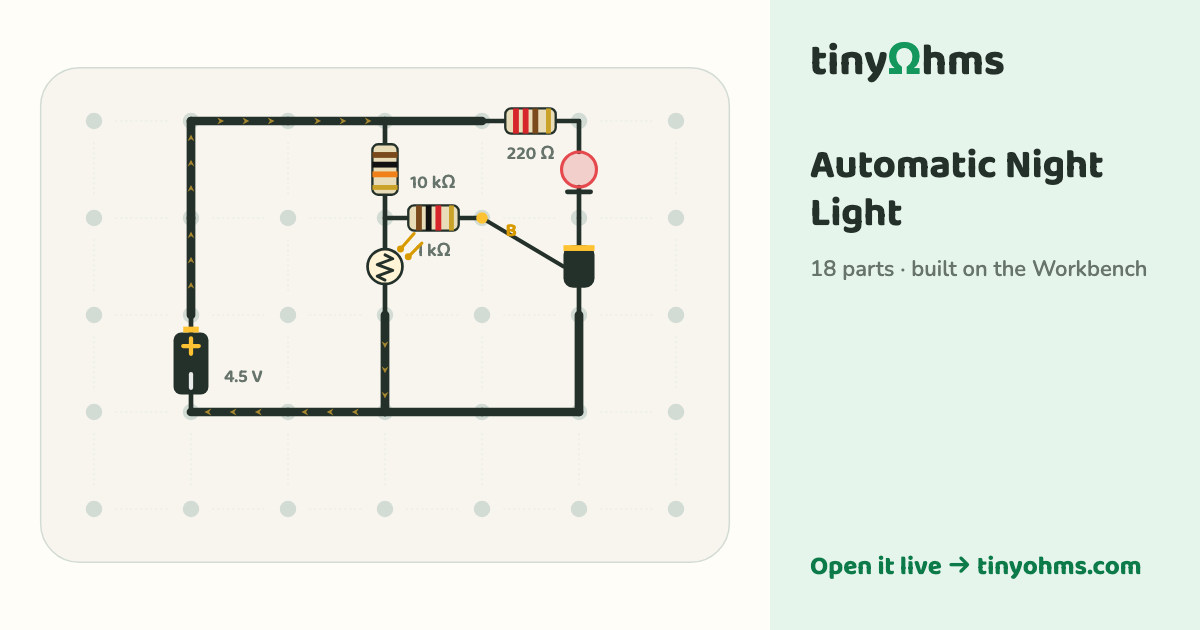 Automatic Night Light
Darken the room and the transistor switches the LED on.
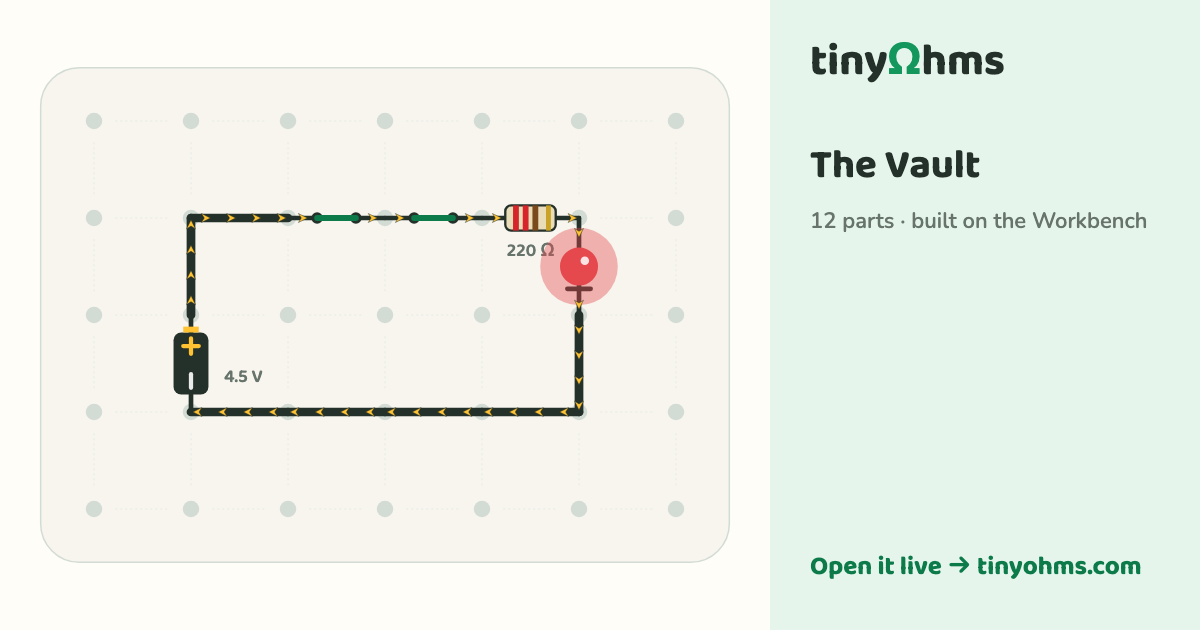 The Vault
Two keys in series. Both must be turned for the light.
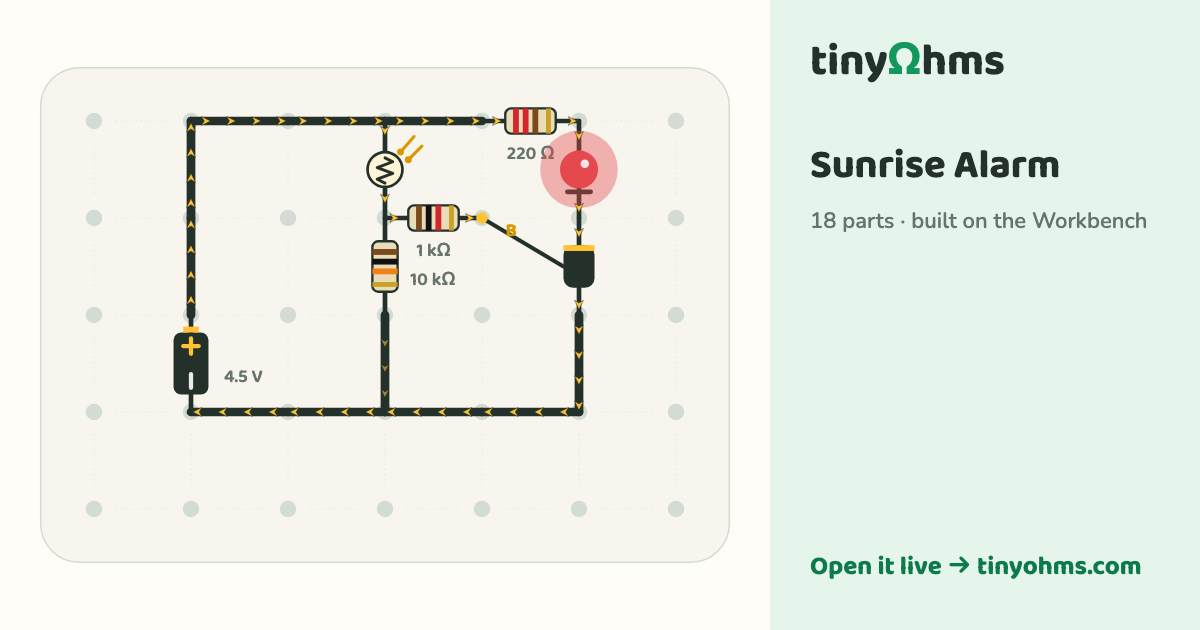 Sunrise Alarm
The night light's divider flipped: light wakes the LED.
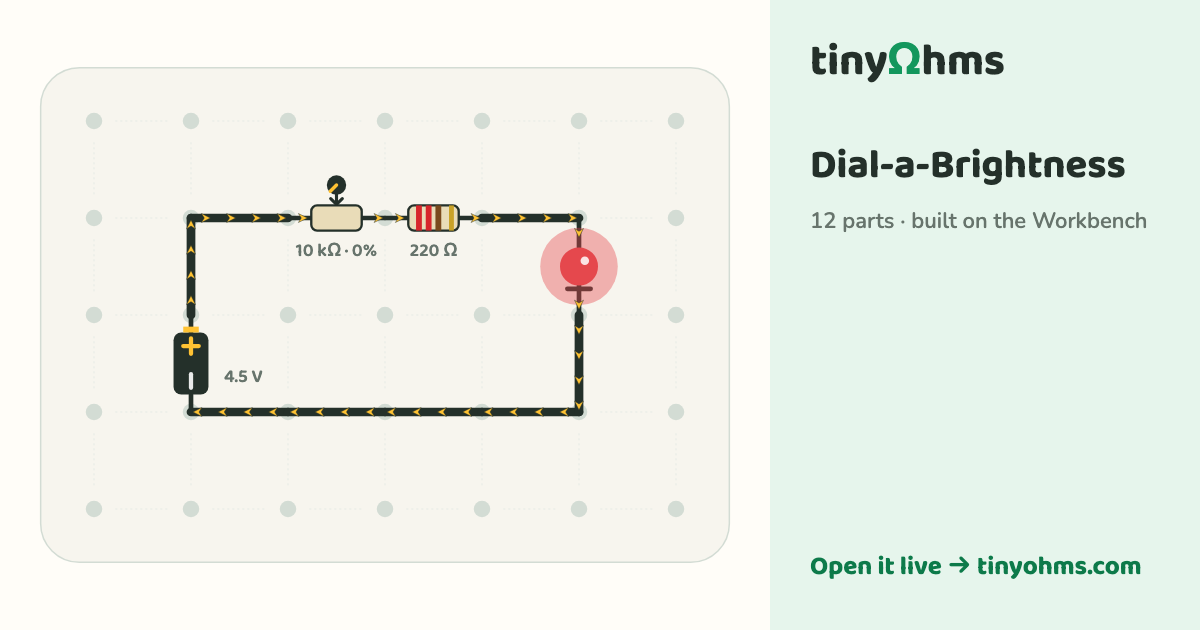 Dial-a-Brightness
A 10 kΩ pot in series with a 220 Ω safety resistor. Tap the pot to turn the knob and watch the LED fade.
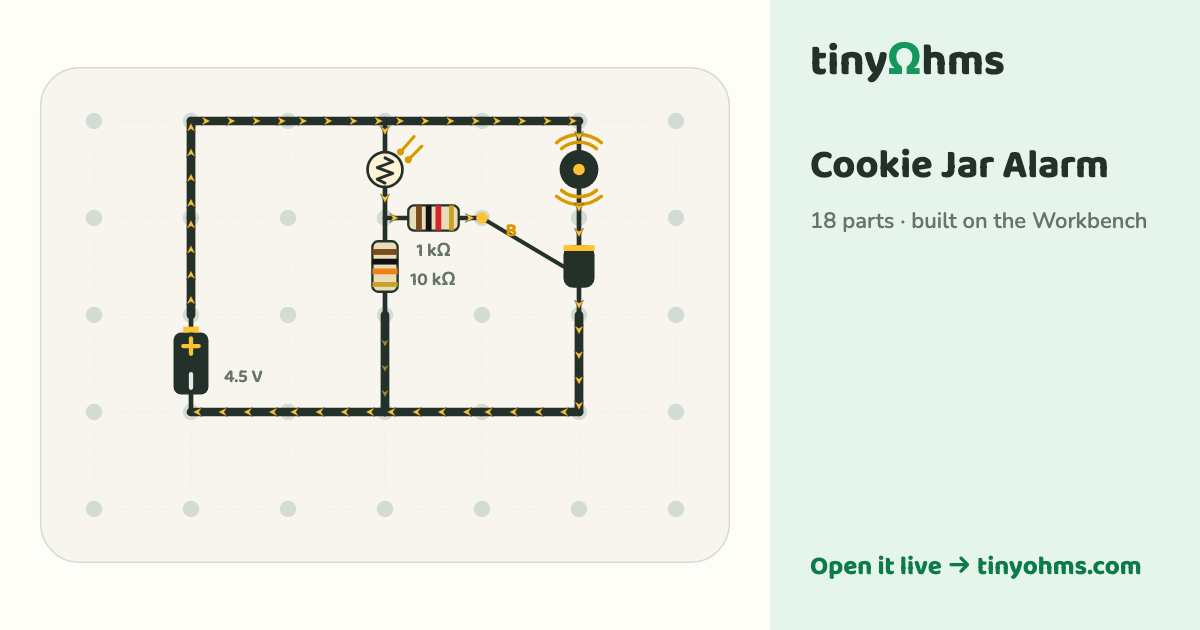 Cookie Jar Alarm
Open the lid (bright room) and the buzzer sounds.
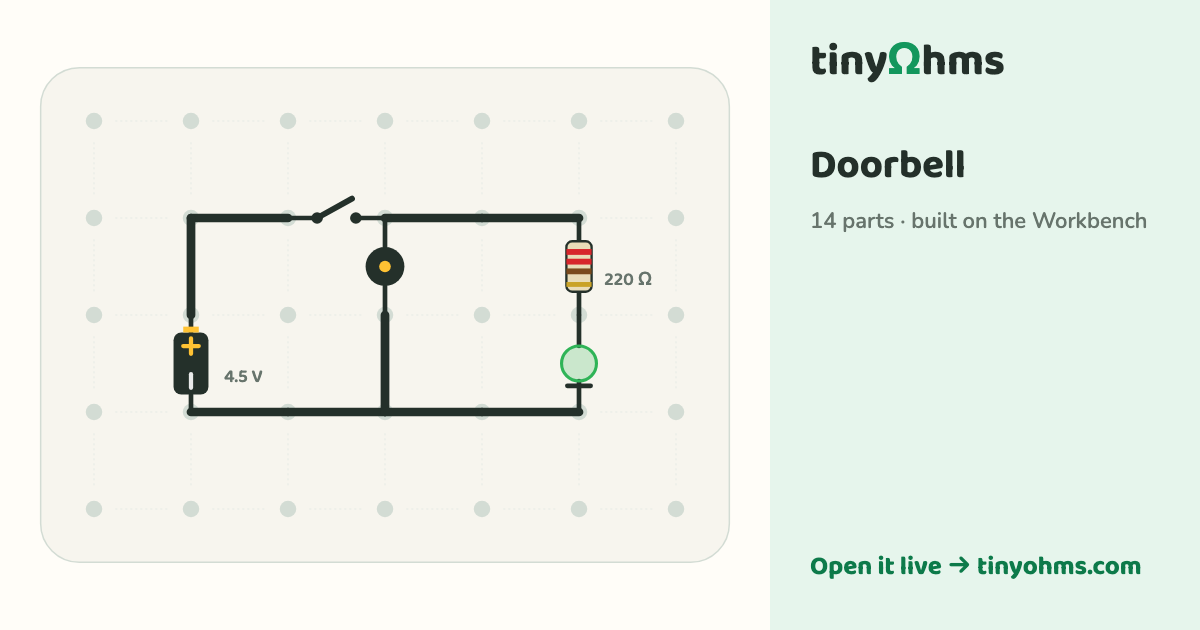 Doorbell
Press the button: buzzer plus a headphones-on light.
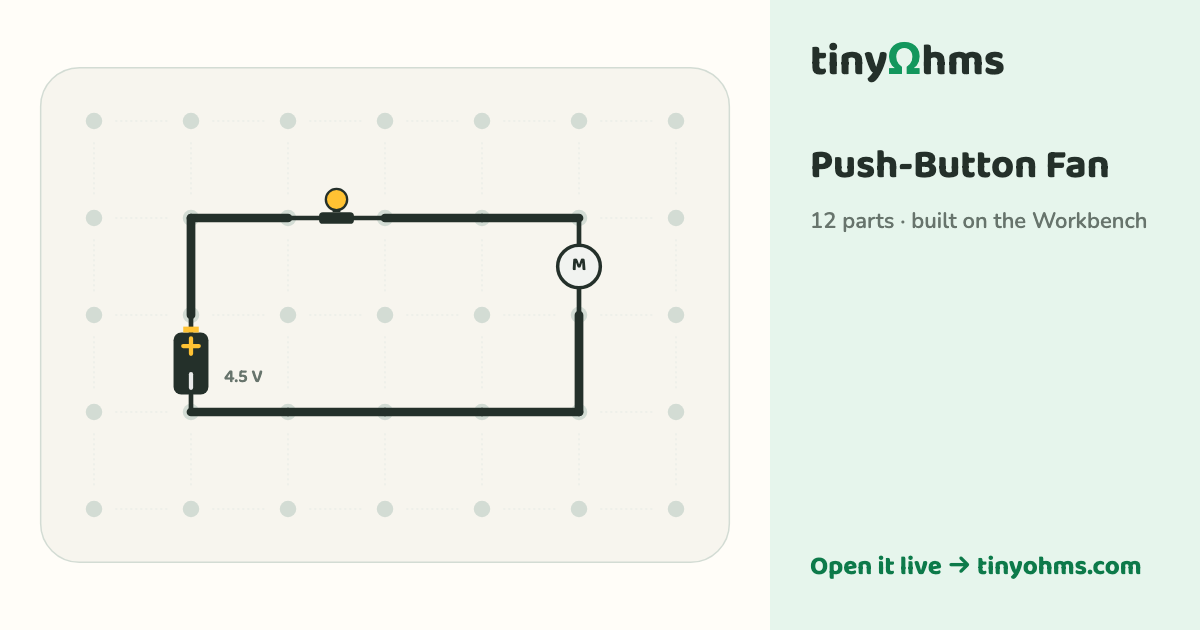 Push-Button Fan
Hold the button and the motor spins. Flip the battery to run it backwards.
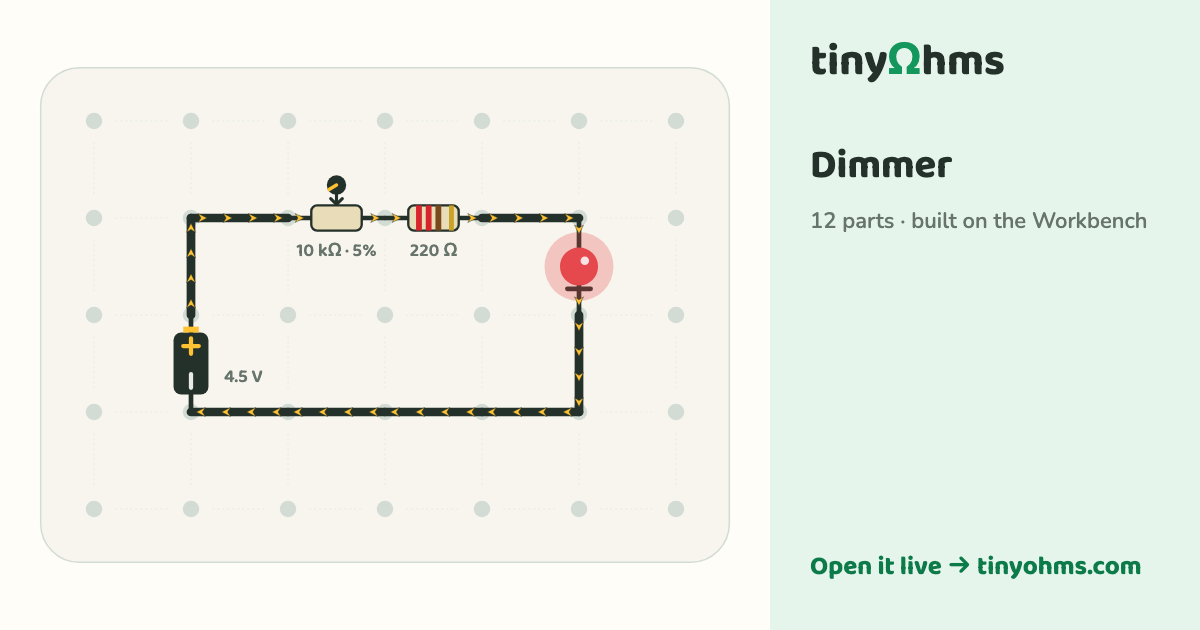 Dimmer
A 10 kΩ pot in series with the LED. Tap it to turn the knob.
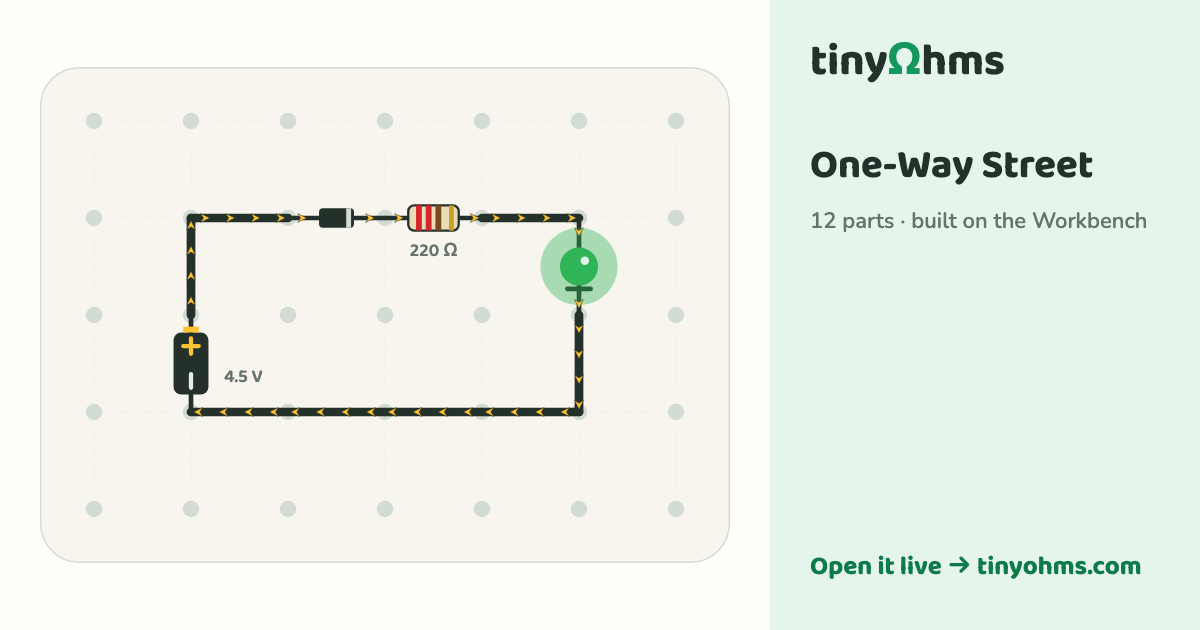 One-Way Street
A diode only passes current one way. Tap it to turn it around.
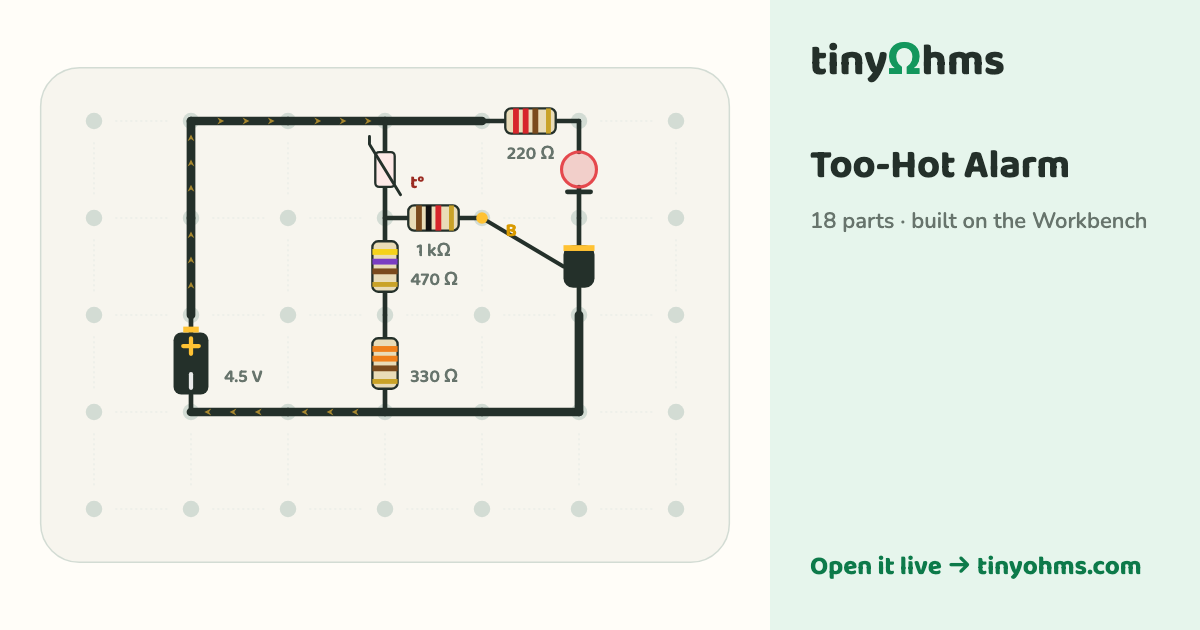 Too-Hot Alarm
Warm the thermistor (slide the temperature up) and the LED comes on.
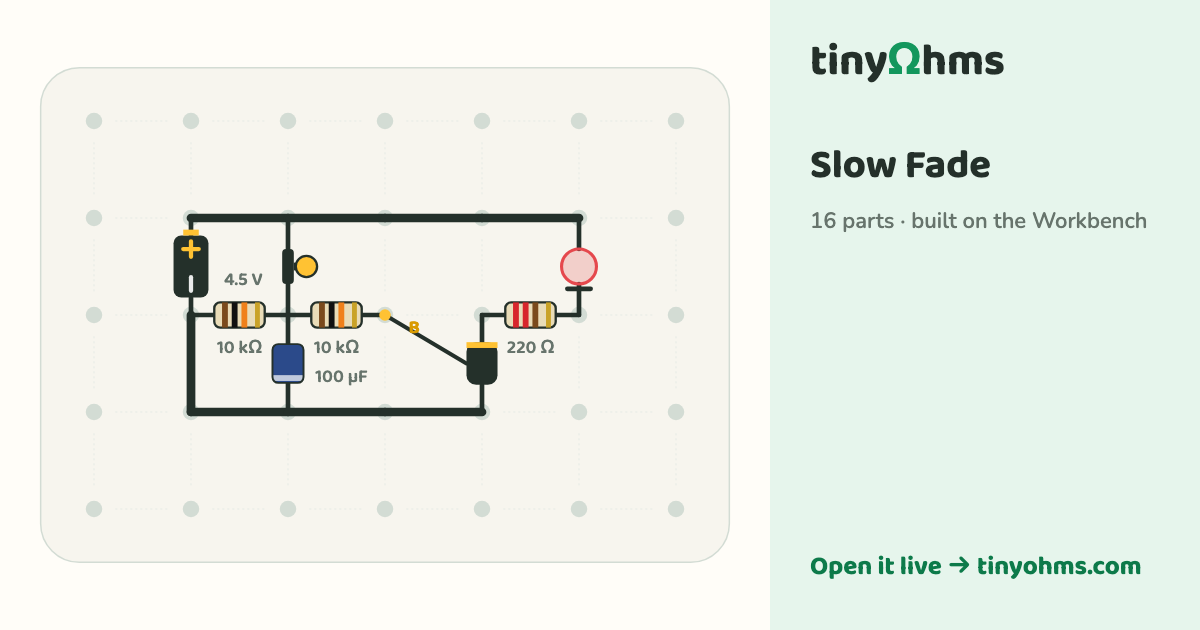 Slow Fade
Hold the button to charge the capacitor. Let go: the LED fades out.
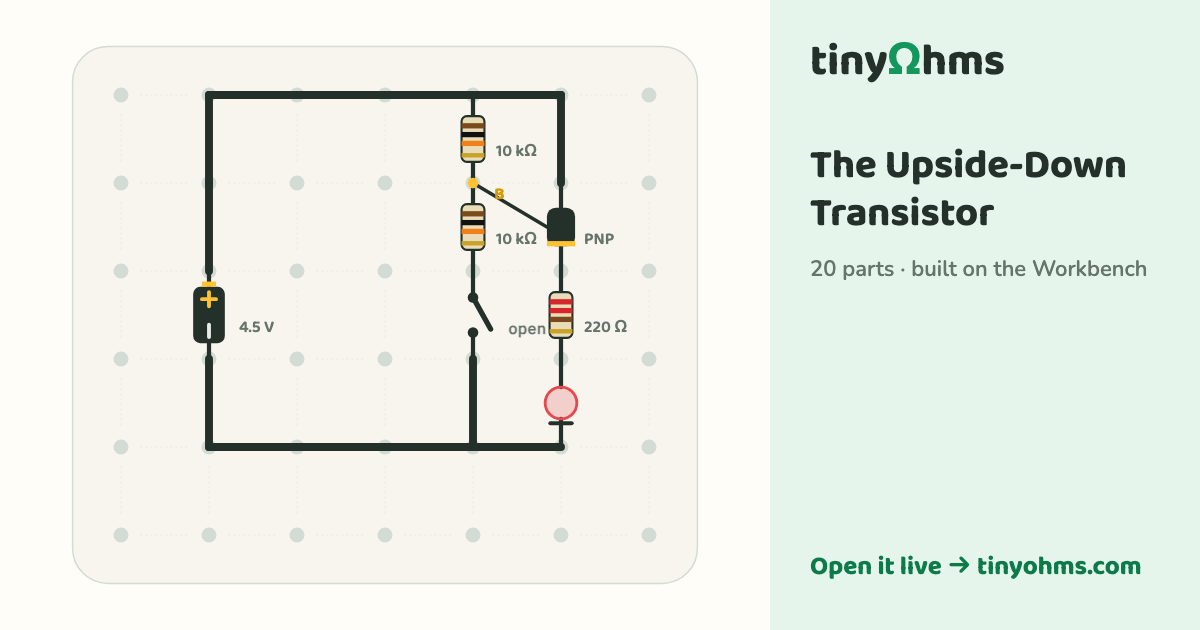 The Upside-Down Transistor
A PNP switches the + side of the lamp. Close the switch to pull its base low and the LED lights.
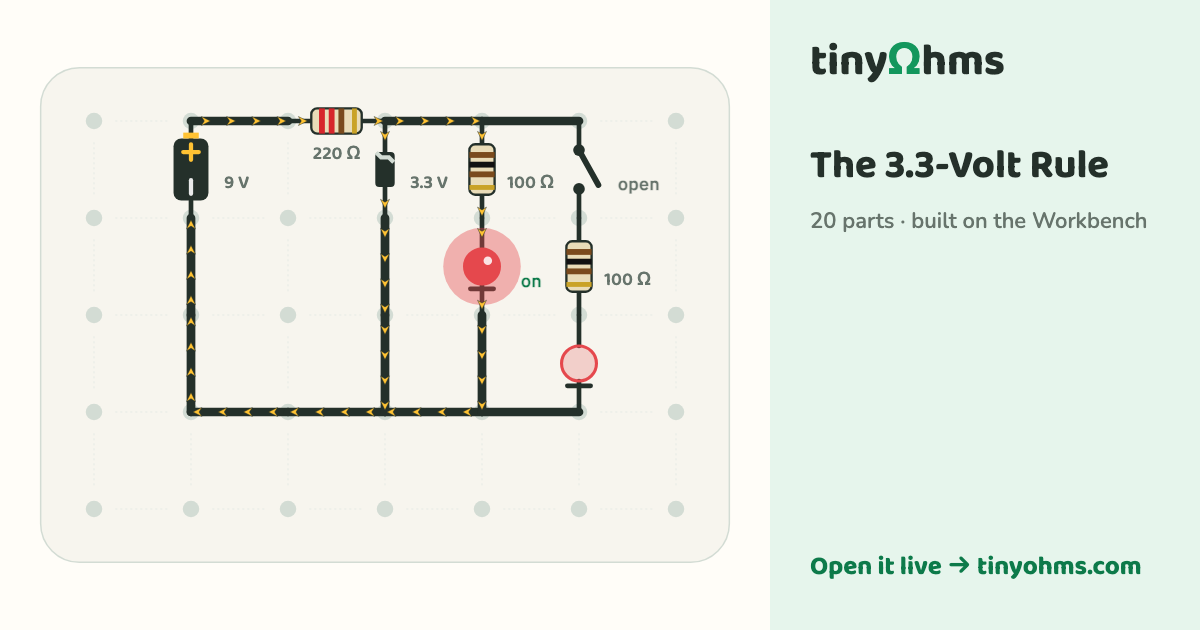 The 3.3-Volt Rule
A zener diode holds 3.3 V for the LED no matter what the 9 V battery wants. Flick the switch to add a second load and watch the zener share.
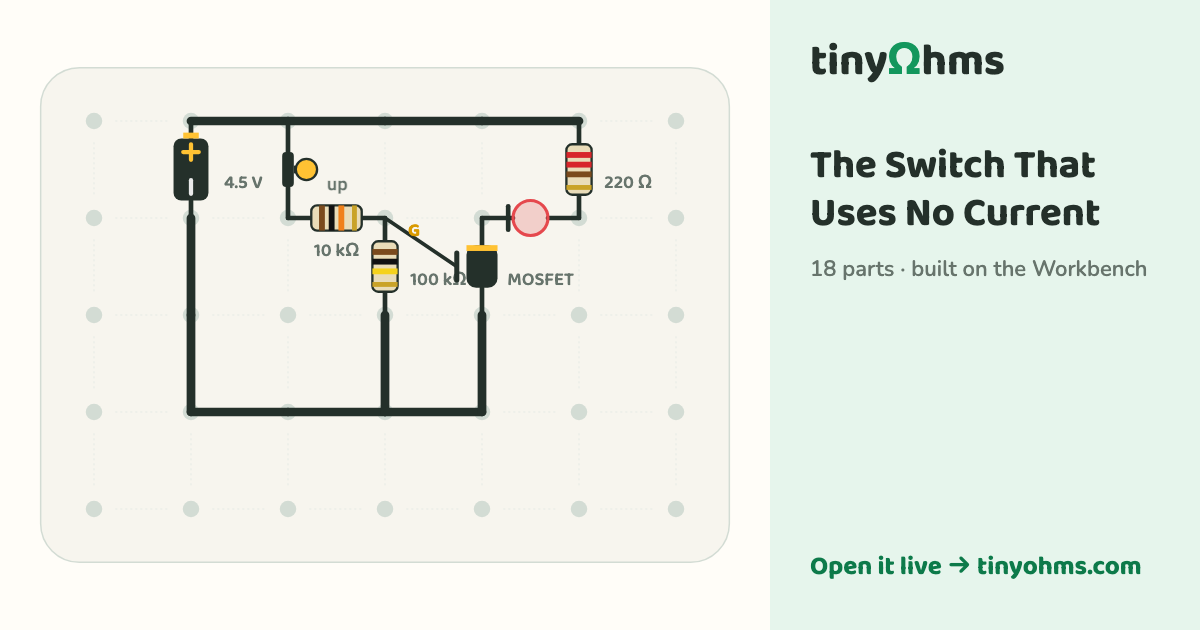 The Switch That Uses No Current
A MOSFET turns the LED fully on, yet its gate draws nothing. Hold the button, then tap the 10 kΩ to make it 100 kΩ and see the gate still win.
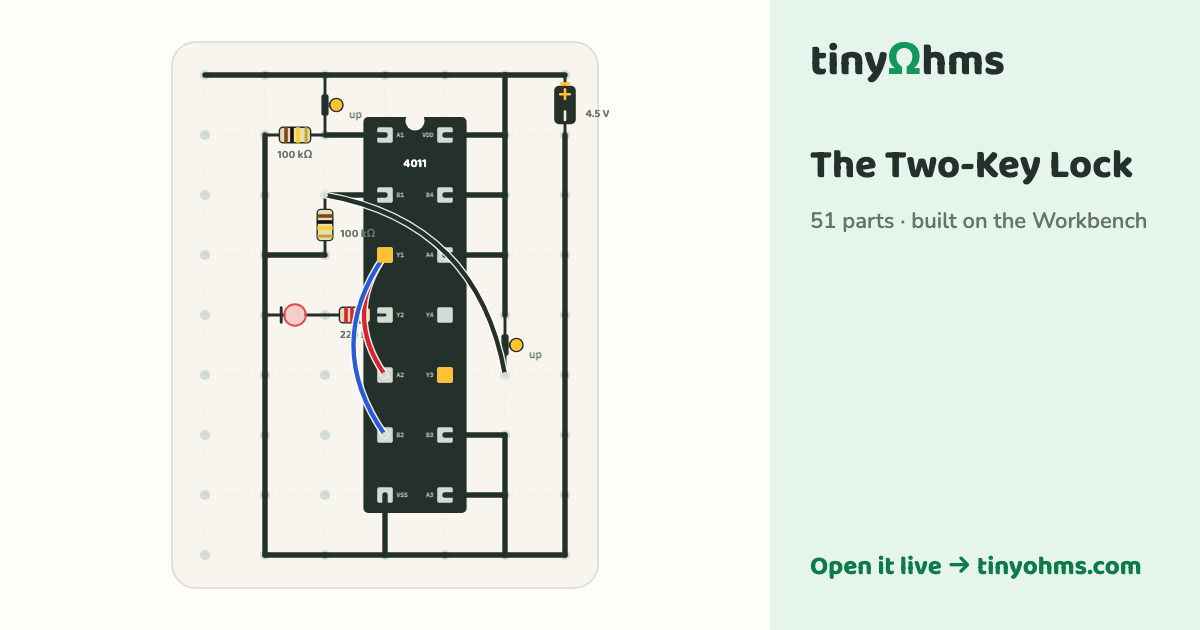 The Two-Key Lock
Two NAND gates make an AND: the LED lights only while BOTH buttons are down. The first logic chip, and the reason NAND is called universal.
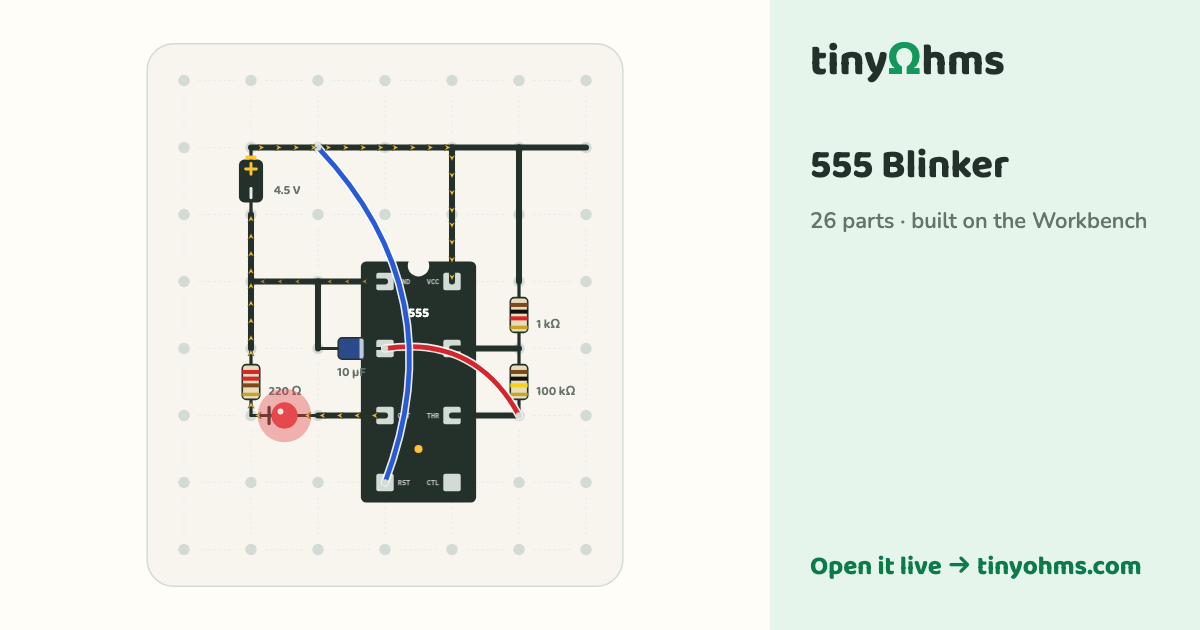 555 Blinker
The classic 555 astable. Watch the capacitor's sawtooth on the scope.
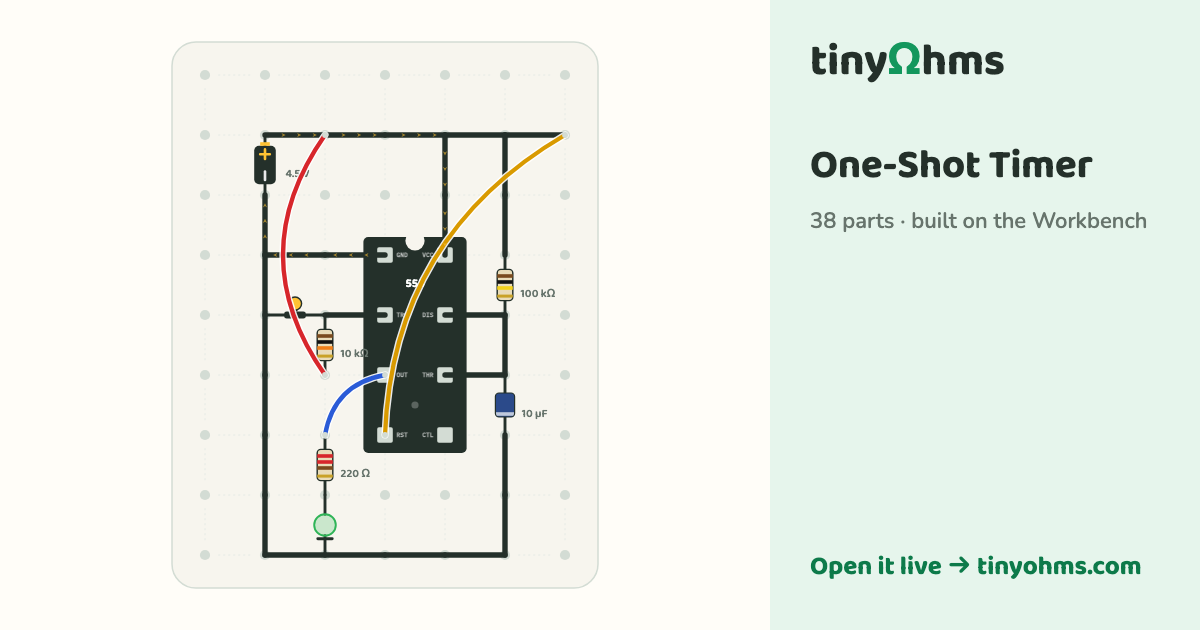 One-Shot Timer
555 monostable: tap the button and the LED stays on for about a second.
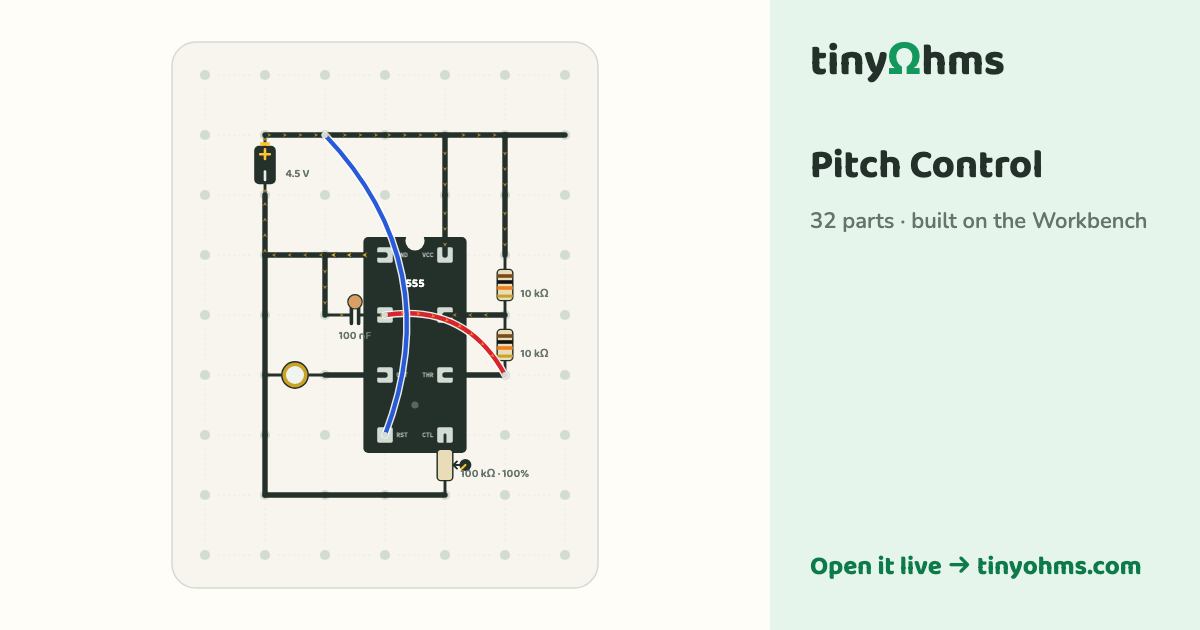 Pitch Control
A 555 at 480 Hz into a piezo. Tap the pot on the CTRL pin to change the pitch.
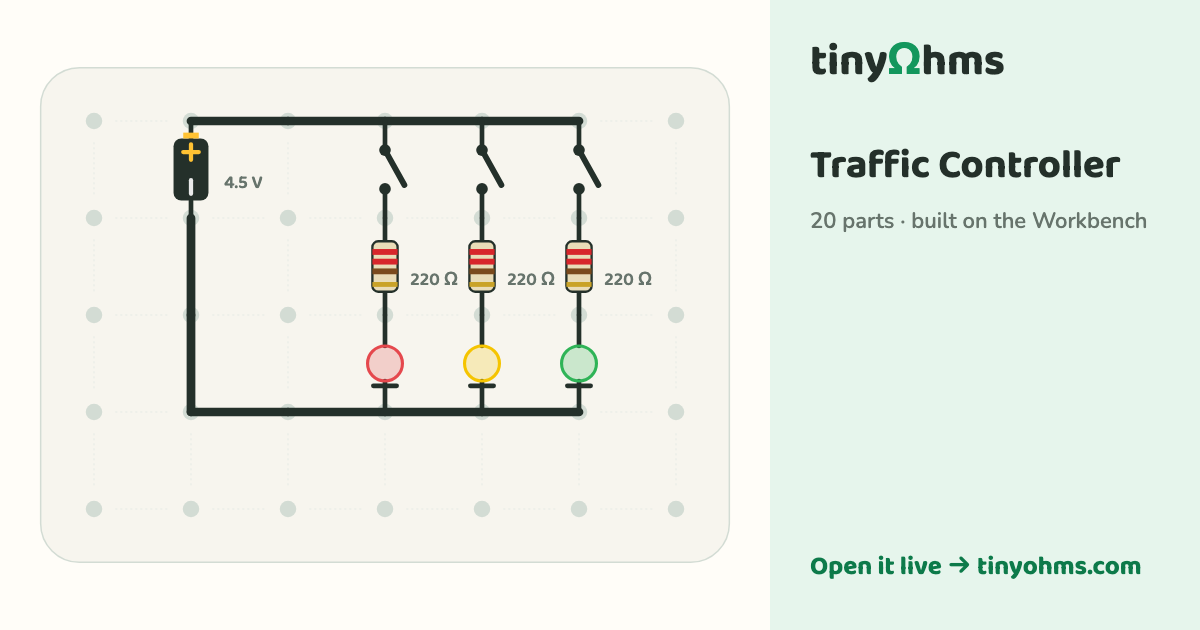 Traffic Controller
The traffic light with a switch per lane. You run the sequence: red, green, amber.
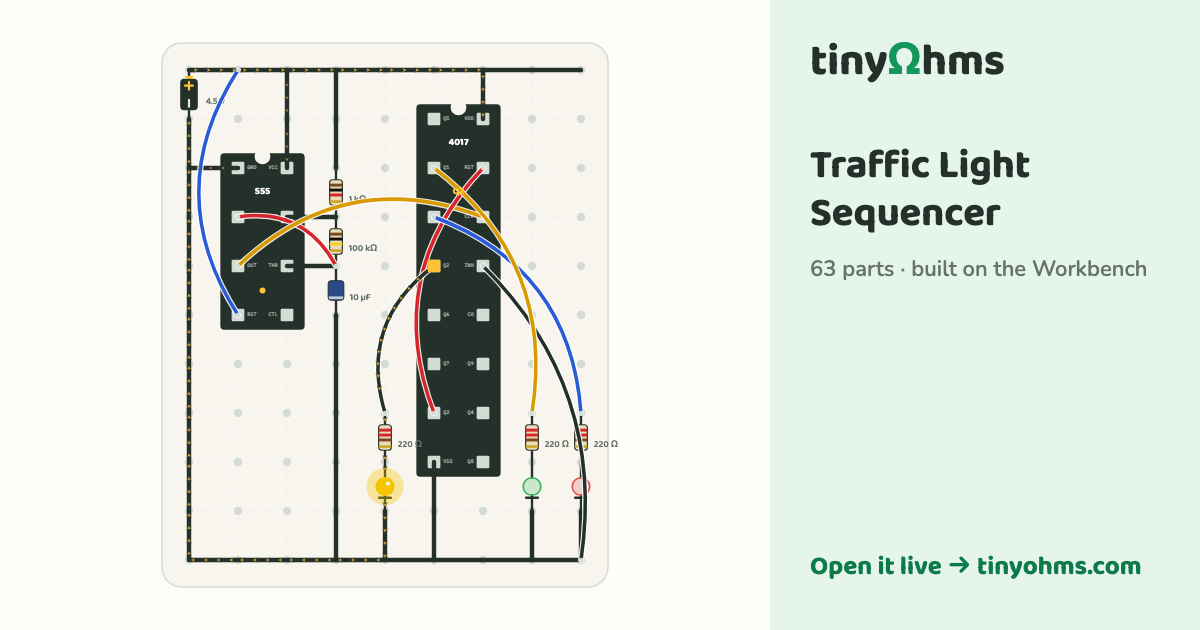 Traffic Light Sequencer
A 555 clock steps a 4017 counter: red, green, amber, repeat. The real thing.
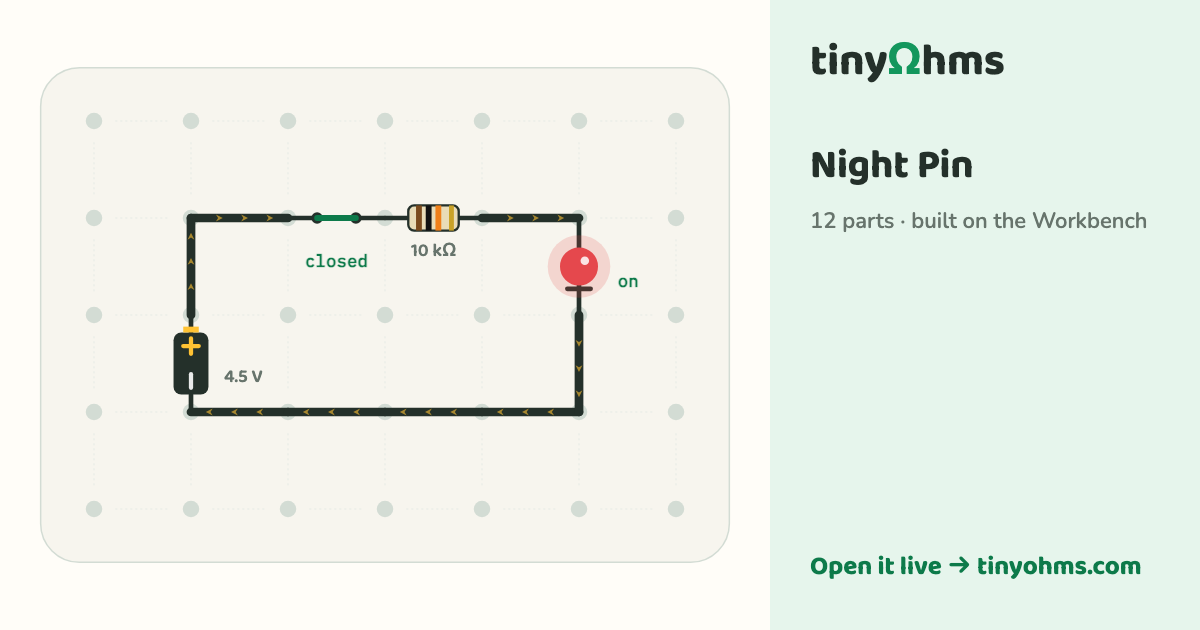 Night Pin
One 10 kΩ, one red LED, one slide — the simplest dimmer. A single big resistor runs the LED at 0.27 mA: invisible in daylight, perfect for a dark room.
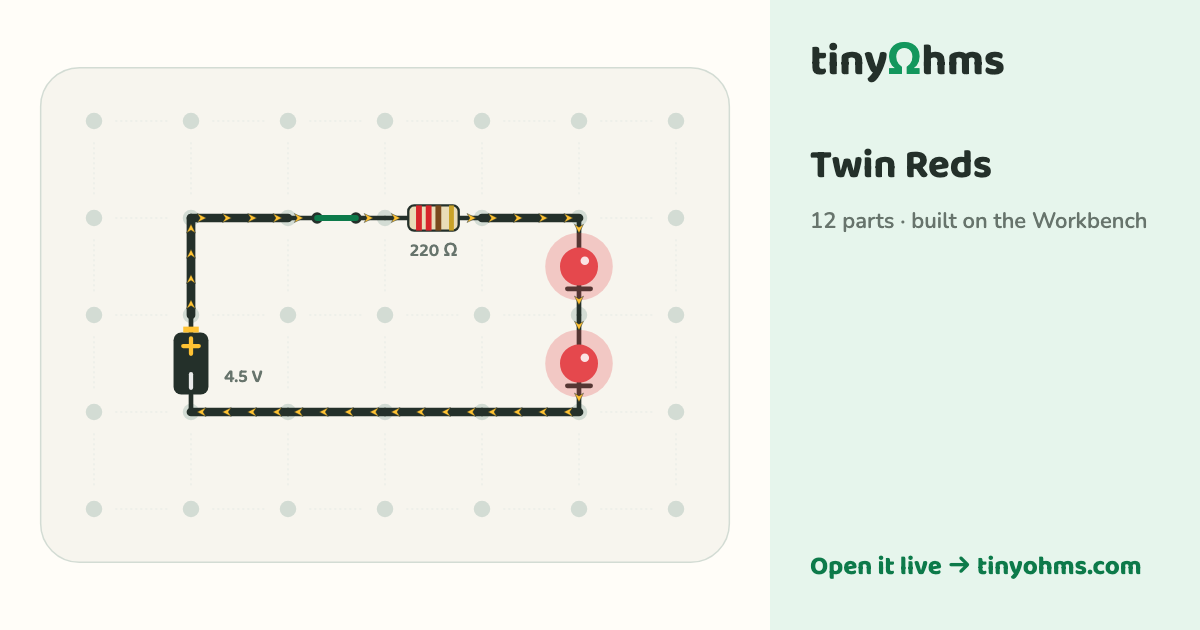 Twin Reds
Two red LEDs on one loop — same current, half the leftover push, and a lesson in how voltages stack when parts sit end to end.
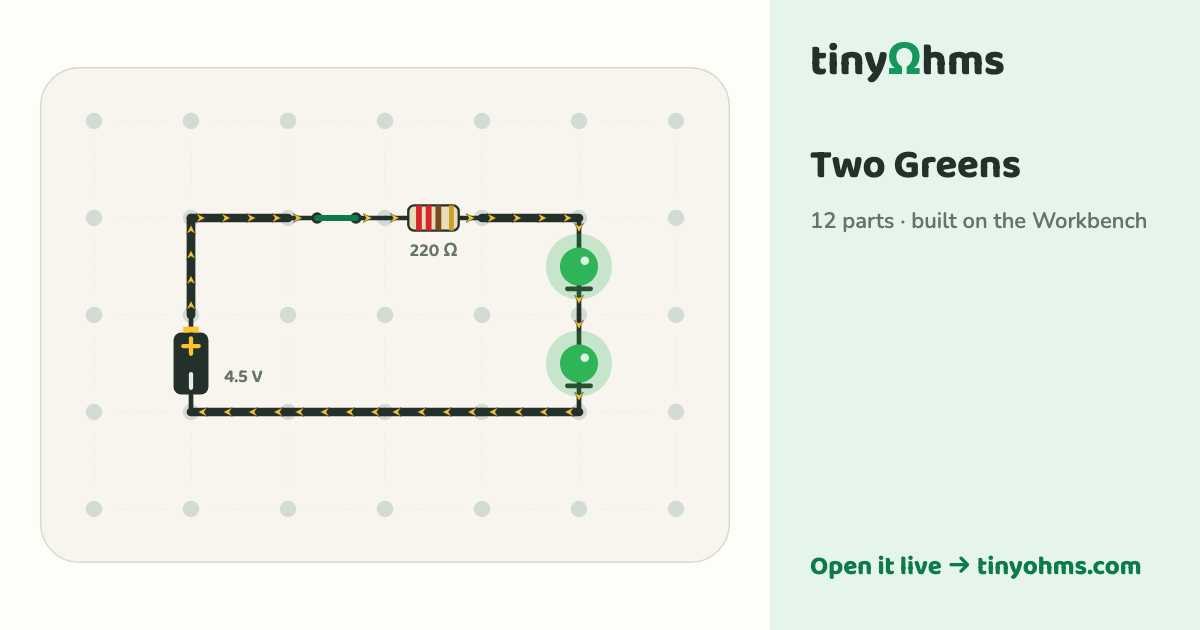 Two Greens
Twin Reds with green LEDs — bigger voltage bites, less leftover for the resistor, and a great lesson in how far a 4.5 V battery can actually push.
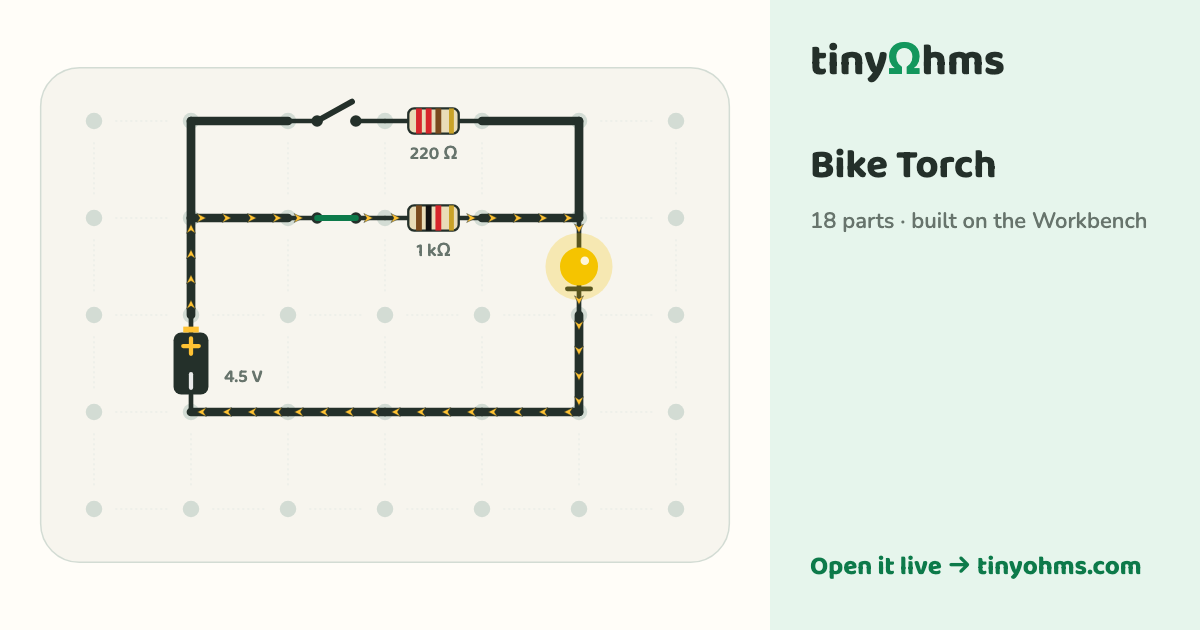 Bike Torch
One yellow LED, two switches: a slide for a battery-friendly low beam, a push button for a bright flash, both lanes feeding the same lamp in parallel.
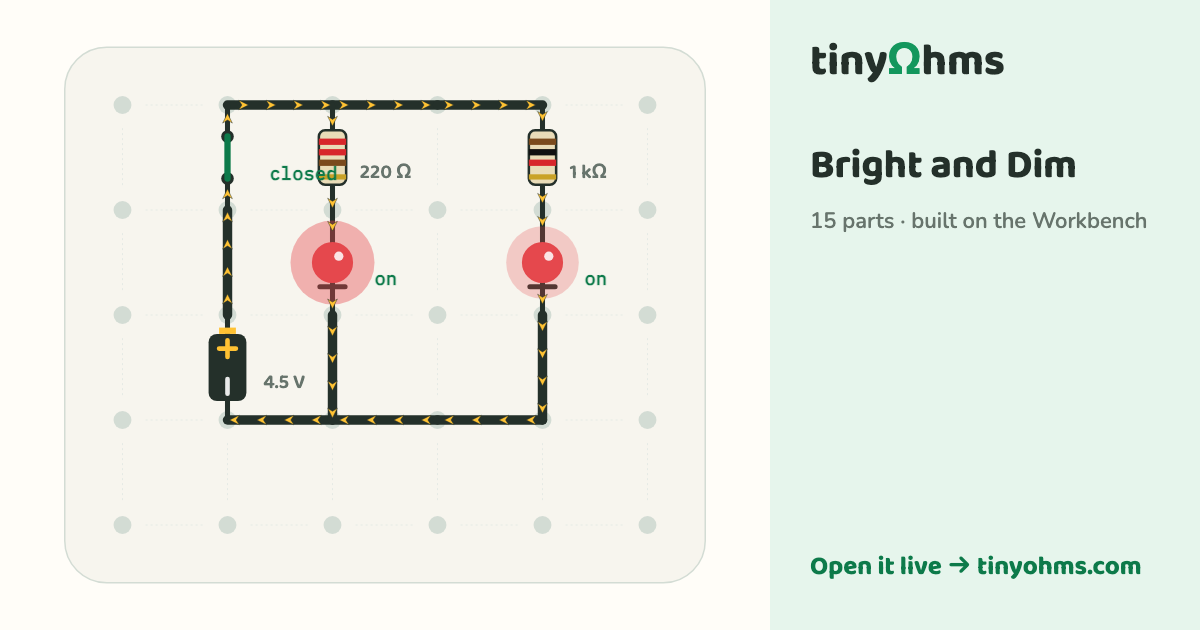 Bright and Dim
Two red LEDs on one battery — one through 220 Ω (bright), one through 1 kΩ (candle). Same LEDs, two currents. The resistor sets each lane's brightness.
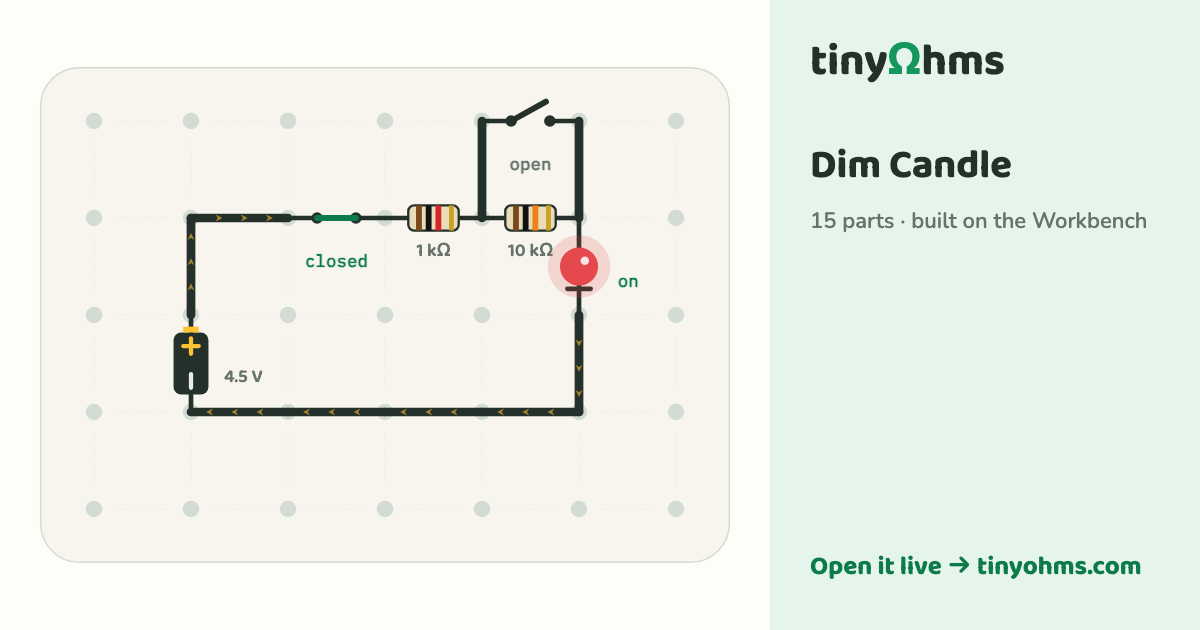 Dim Candle
A 1 kΩ and a 10 kΩ in series throttle a red LED to a candle glow. Flip the bypass slide — the 10 kΩ gets shorted and the LED pops to normal brightness.
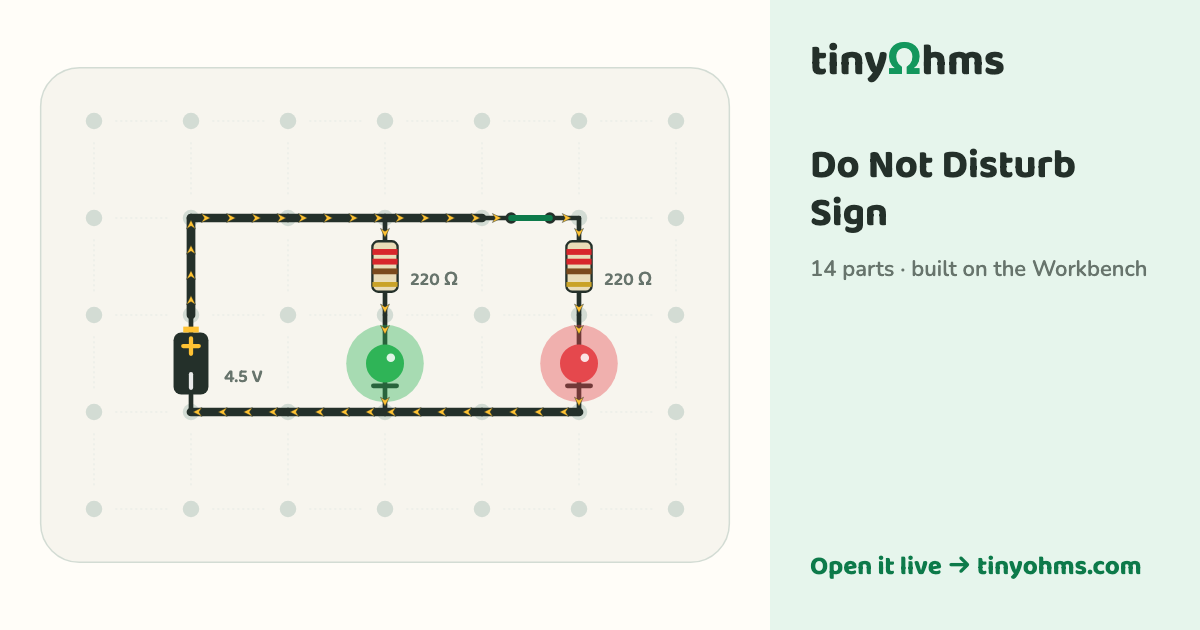 Do Not Disturb Sign
A green "chill" LED plus a switched red "leave me alone" LED — two lanes on one battery, and a switch that only touches one of them.
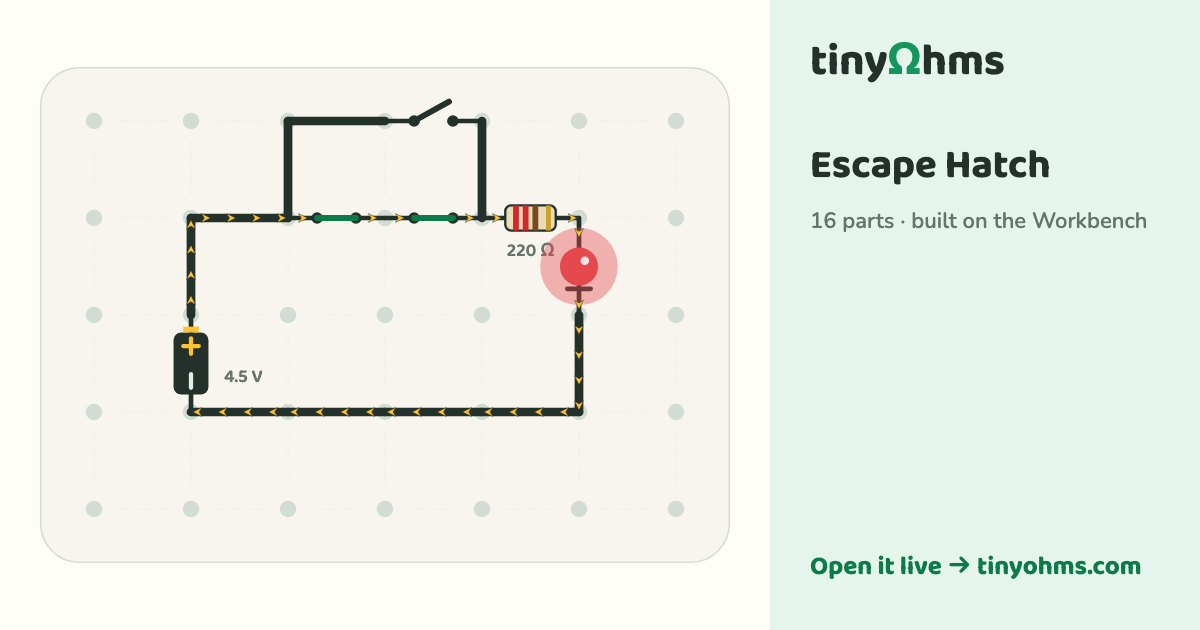 Escape Hatch
The Vault with a big red emergency button wired around both locks — turn BOTH keys, or hit the button, and the light comes on.
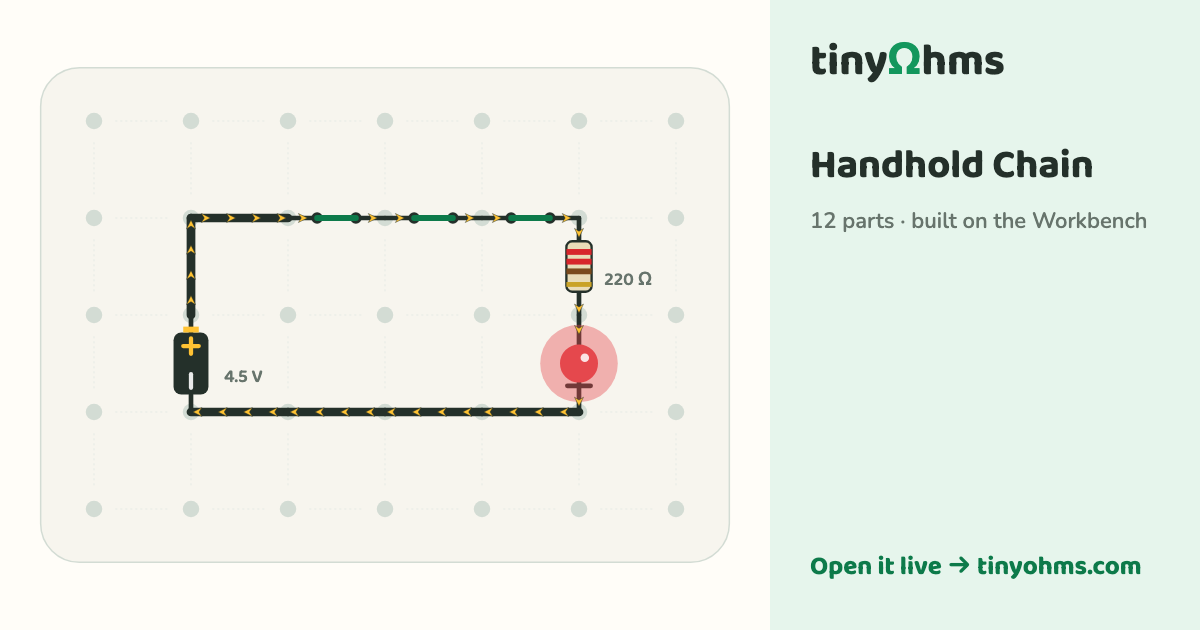 Handhold Chain
Three switches in a line — the LED only lights when all three are closed at once. AND, one step past The Vault.
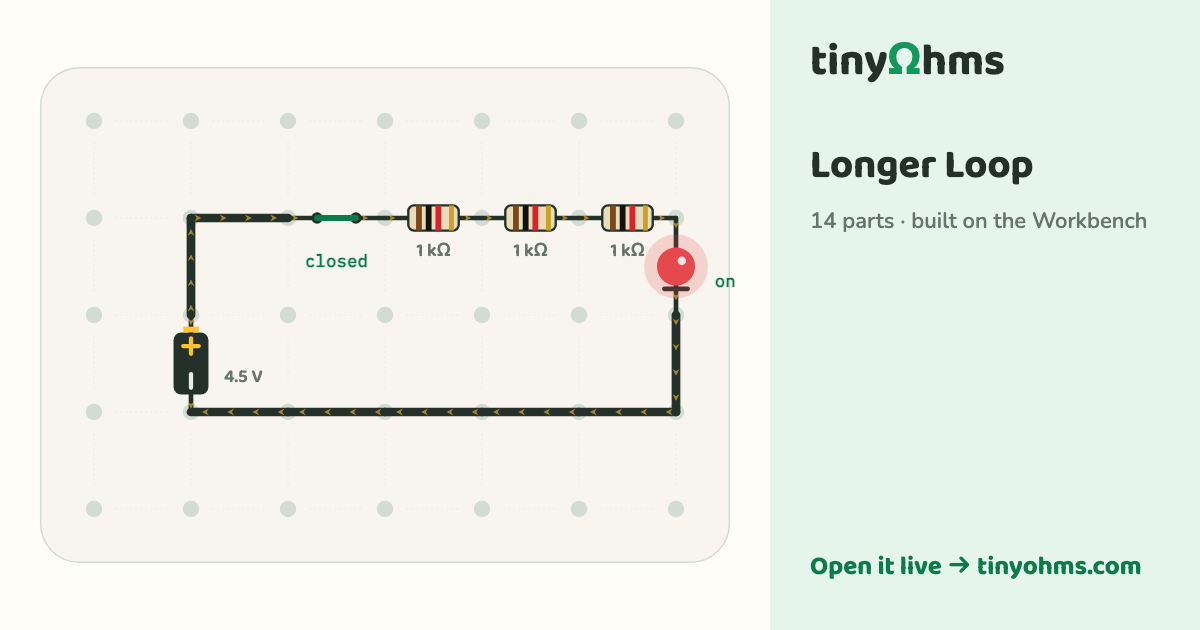 Longer Loop
Three 1 kΩ speed bumps stacked end-to-end on one lane feed a single red LED. Resistors in series ADD up — the LED is throttled to a near-dark 0.87 mA.
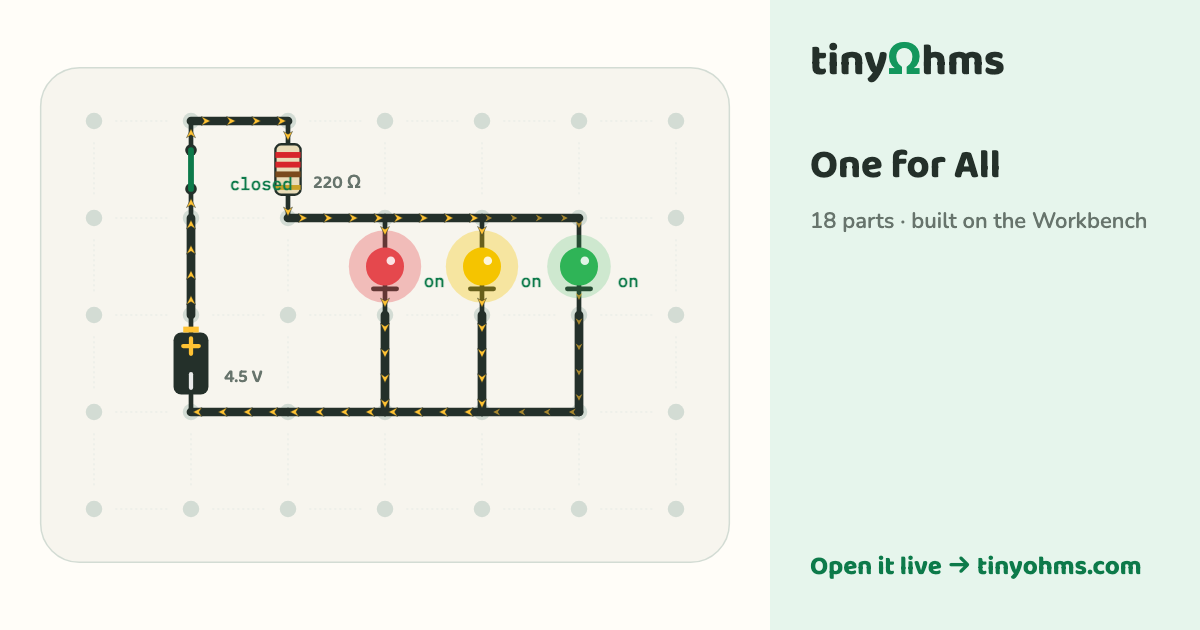 One for All
Three LEDs on ONE shared 220 Ω — the shortcut that fails. Red and yellow dim-split the current; green sits dark. Lesson: each LED needs its own resistor.
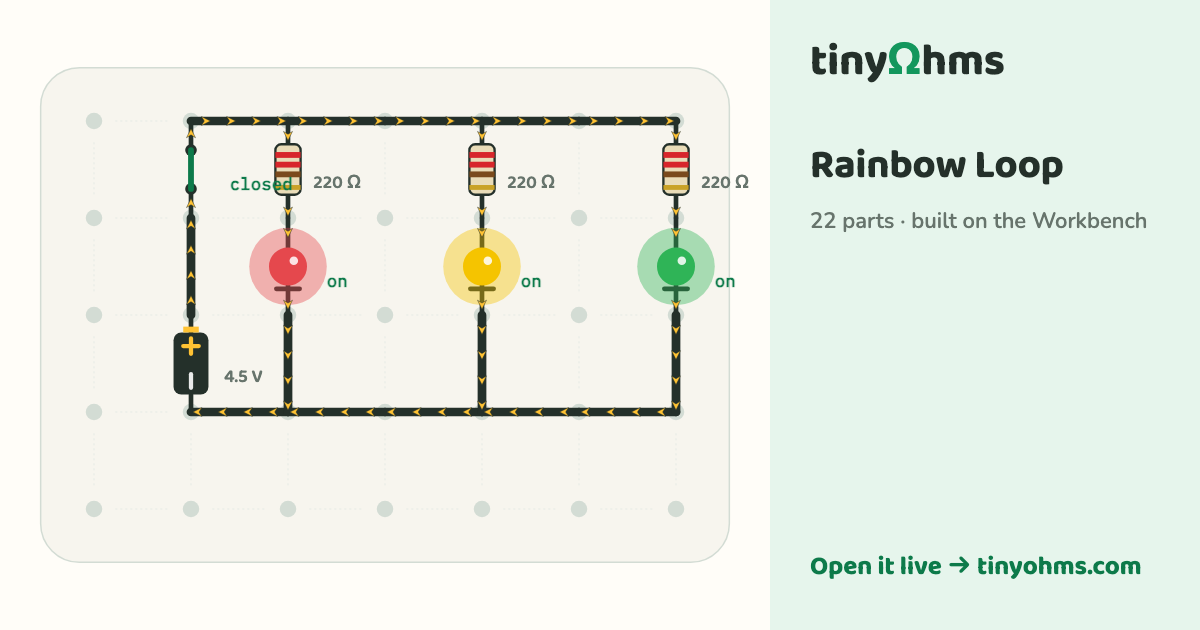 Rainbow Loop
Red, yellow and green LEDs on three parallel 220 Ω lanes under one slide. One flip lights all three, each lane running its own Ohm's law.
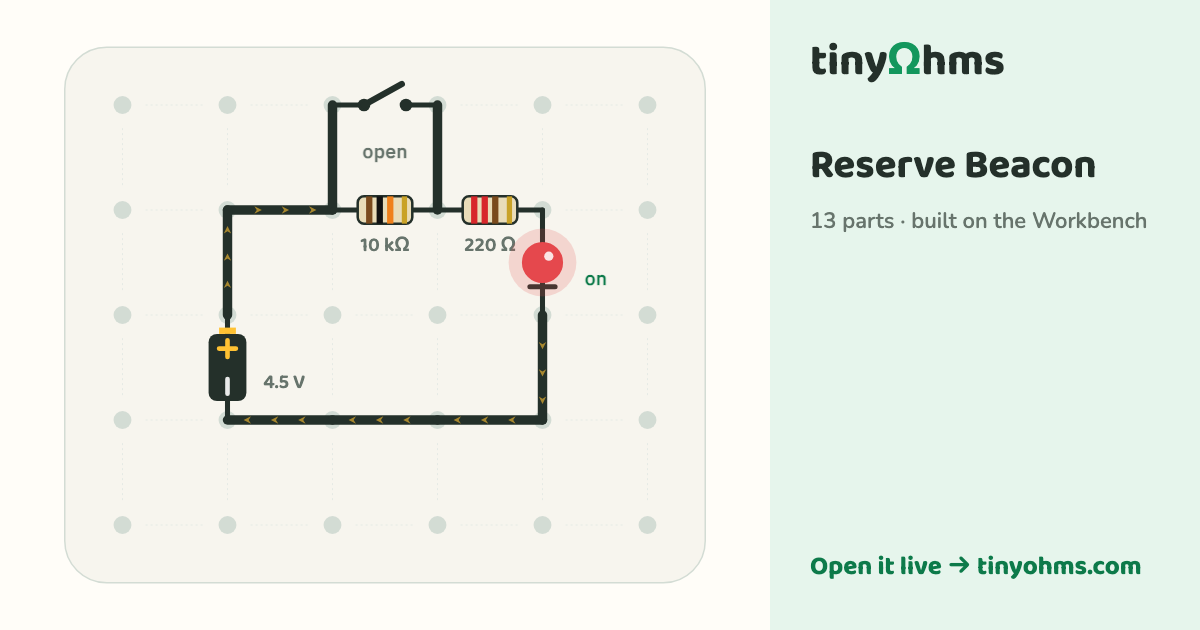 Reserve Beacon
A 10 kΩ in series with the LED keeps a dim always-on pilot glow. Flip the bypass slide — it shorts the 10 kΩ, and the pilot pops to full First-Light brightness.
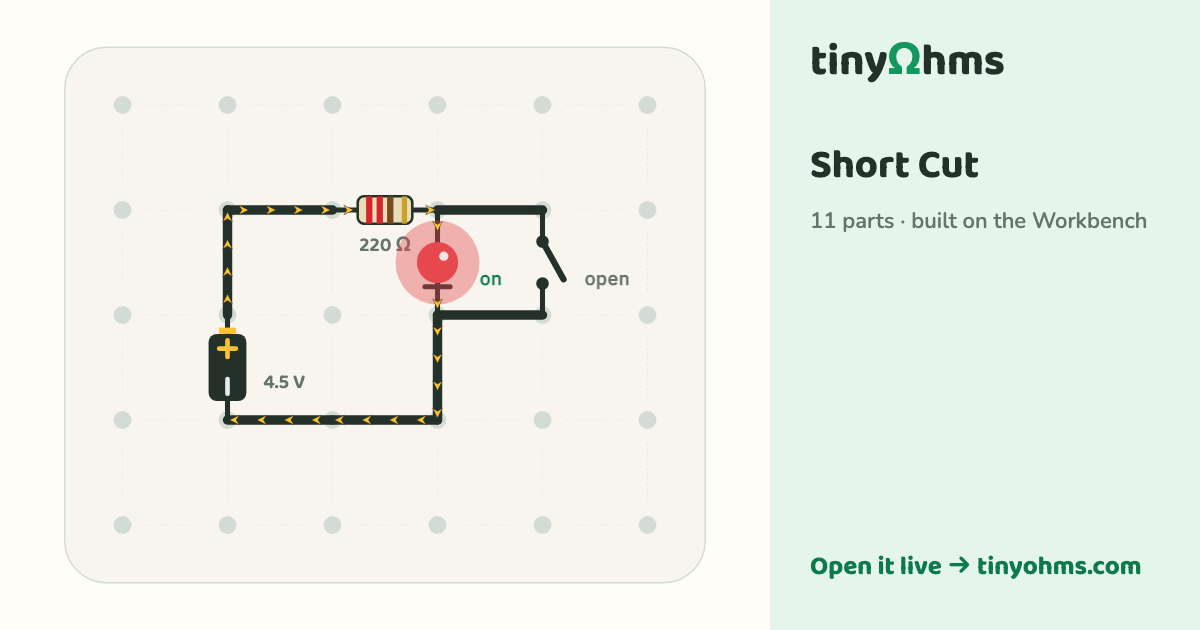 Short Cut
First Light with a slide switch wired straight across the LED. Flip the slide and the LED goes dark even though the loop stays complete.
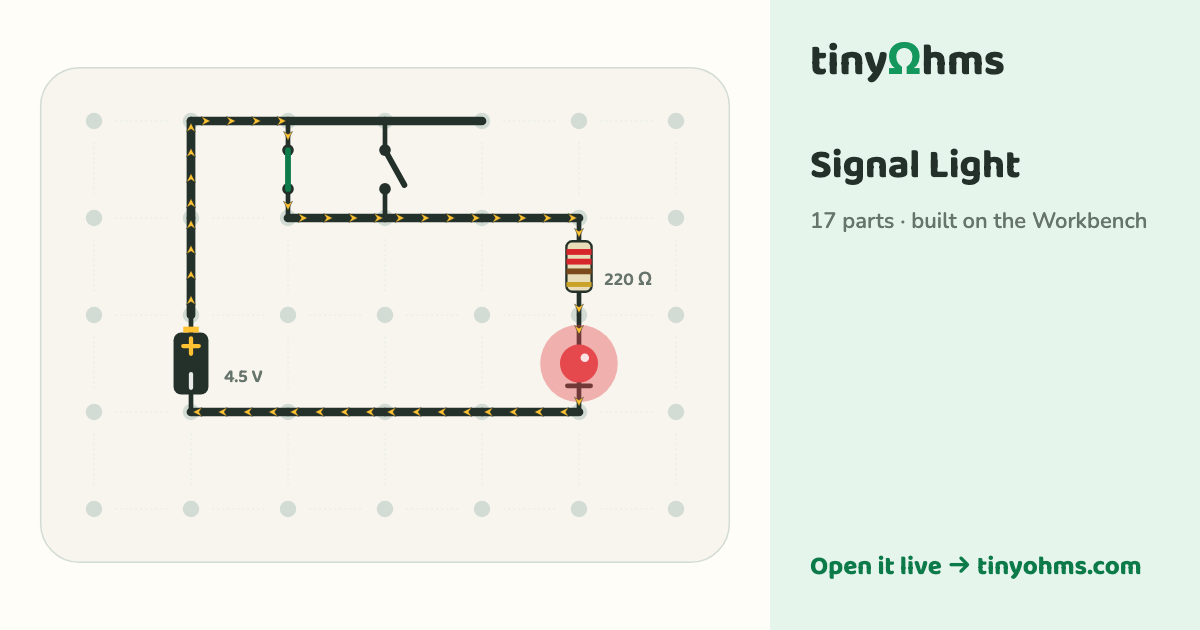 Signal Light
A slide switch and a push button in parallel — the slide is the steady beacon, the button is the extra flash. Either lights the lamp.
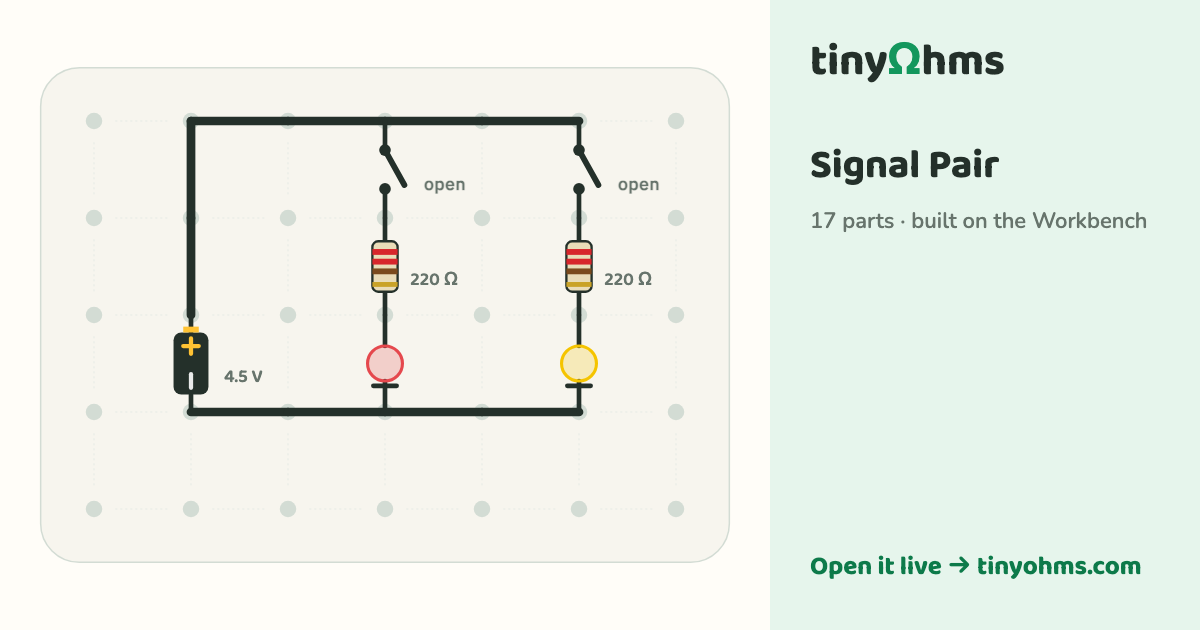 Signal Pair
Two push buttons, two LEDs, one battery — no sharing. Each button lights its own lamp with its own current, independent of the other.
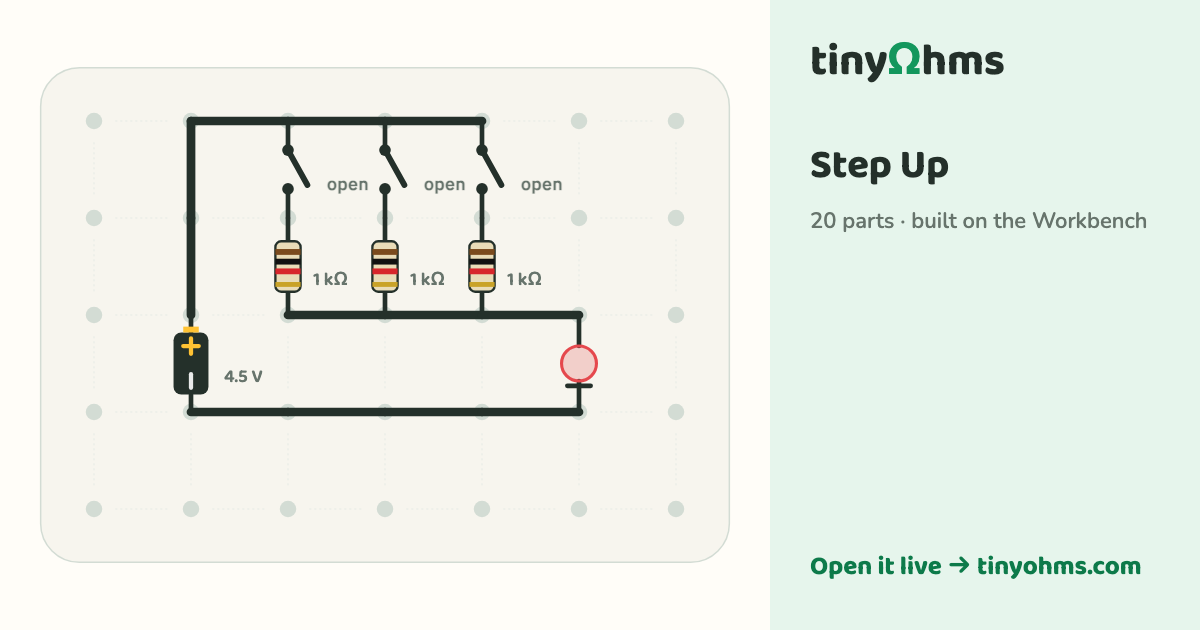 Step Up
Three 1 kΩ lanes in parallel into one red LED, each with its own slide switch. One slide = candle, two = glow, three = full lamp. The lanes stack.
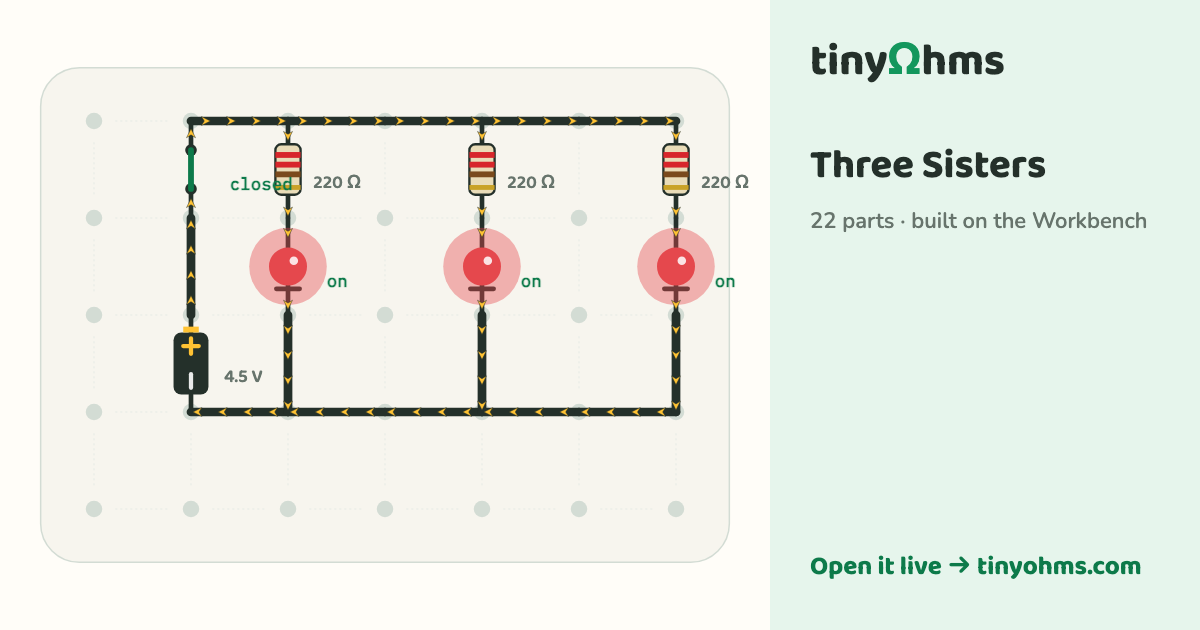 Three Sisters
Three red LEDs side by side from one battery — each with its own 220 Ω — proving parallel lanes do their own Ohm's law and the battery adds the bill.
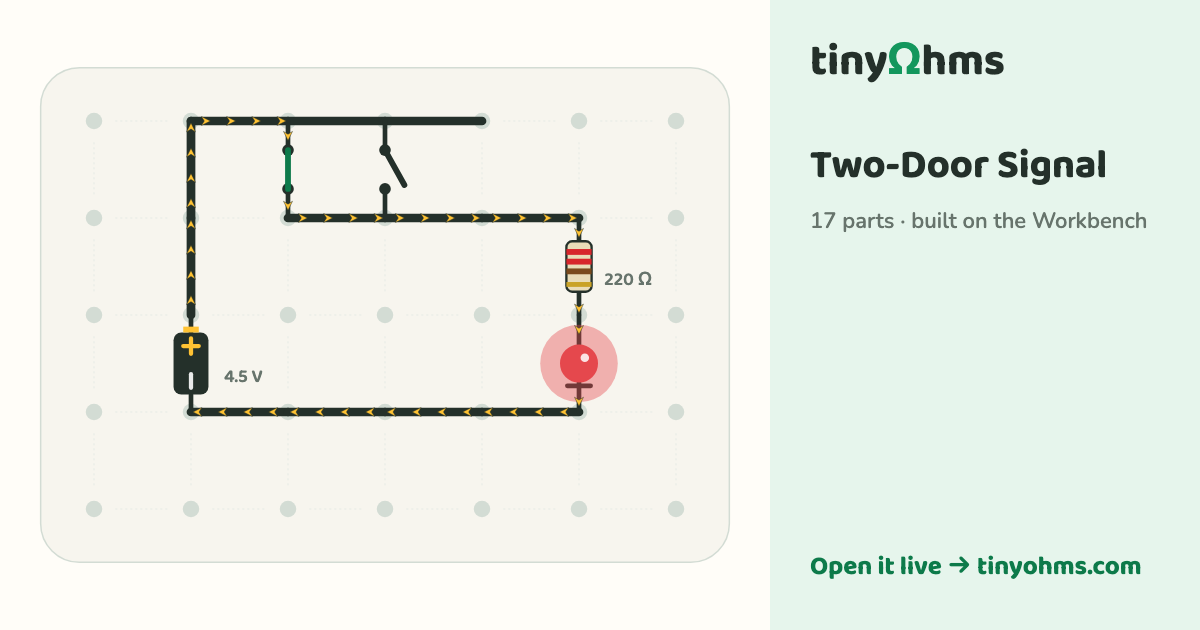 Two-Door Signal
Two slide switches in parallel, one shared LED — either switch alone lights the lamp. The OR gate, at Level 1.
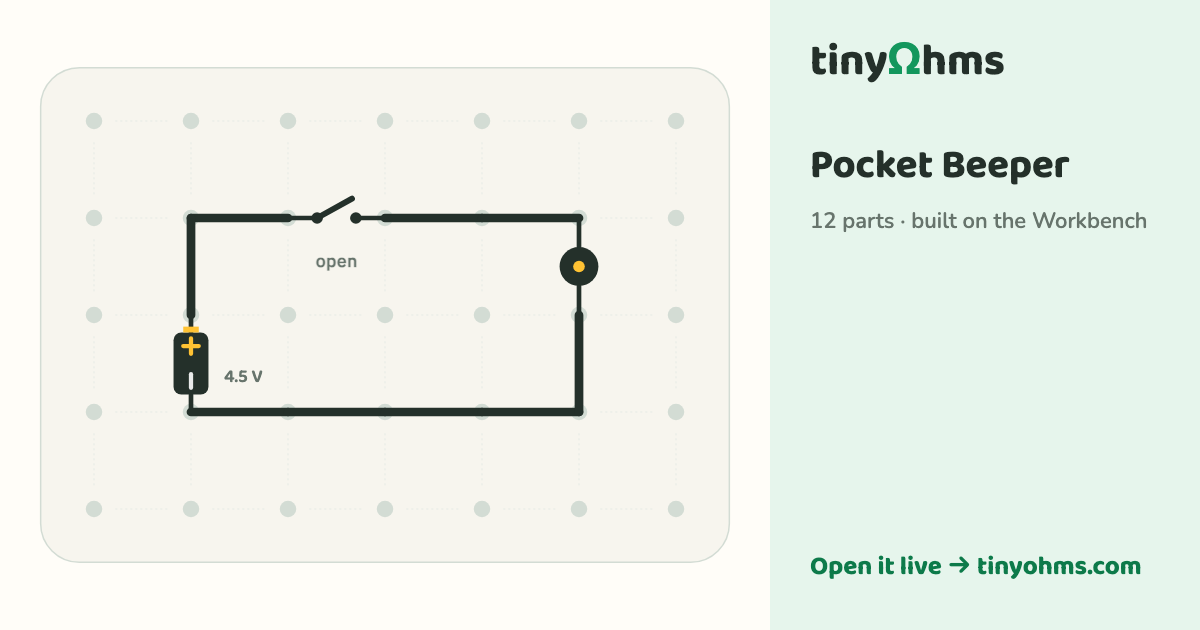 Pocket Beeper
Level 2's answer to First Light: battery, push button, buzzer. Three parts, one loop, one loud beep — no resistor and no LED to explain.
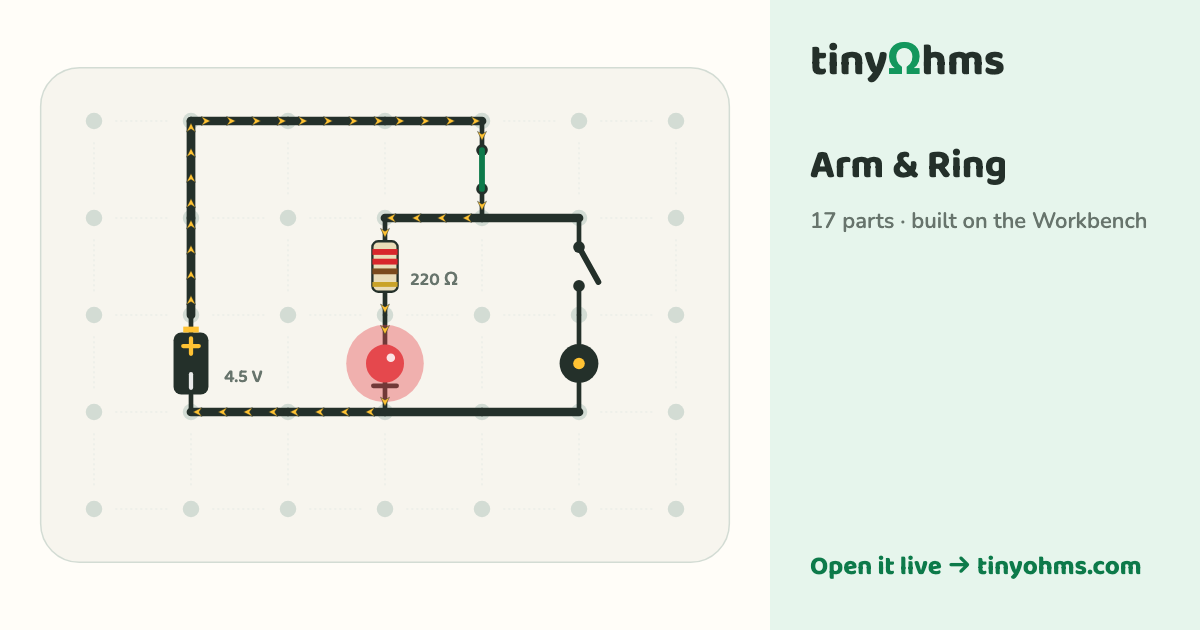 Arm & Ring
A doorbell that ignores you unless a hidden slide switch is armed first — series-AND with sound, plus an 'armed' LED that shows the state.
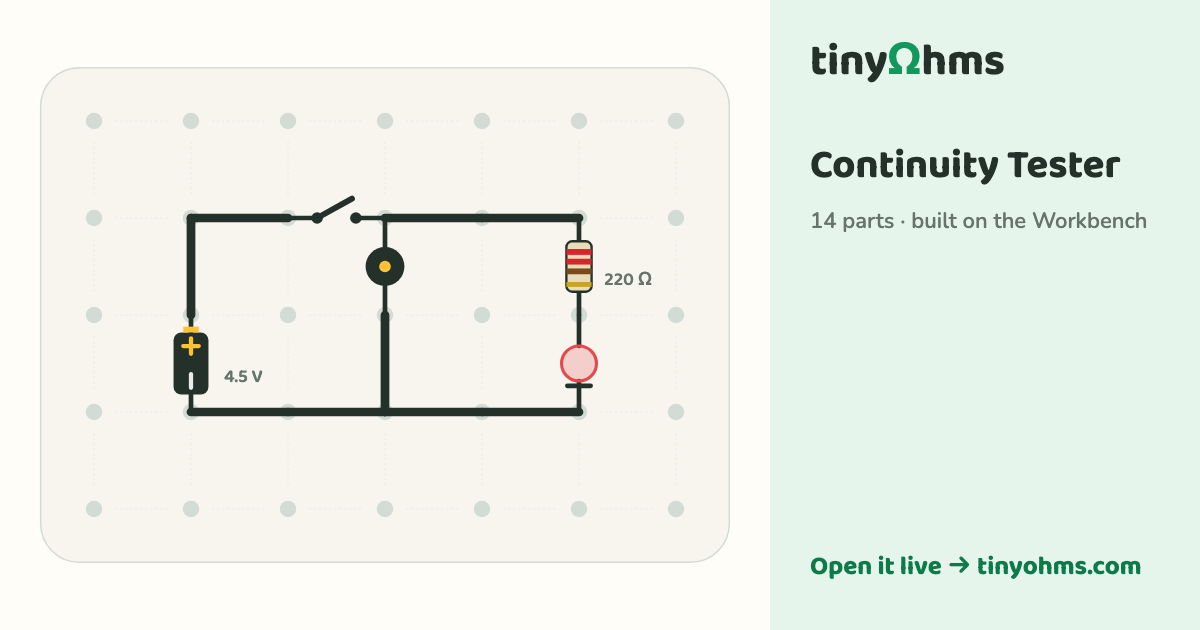 Continuity Tester
Your first real tool — two probe wires that beep and light up whenever the tips touch anything that conducts.
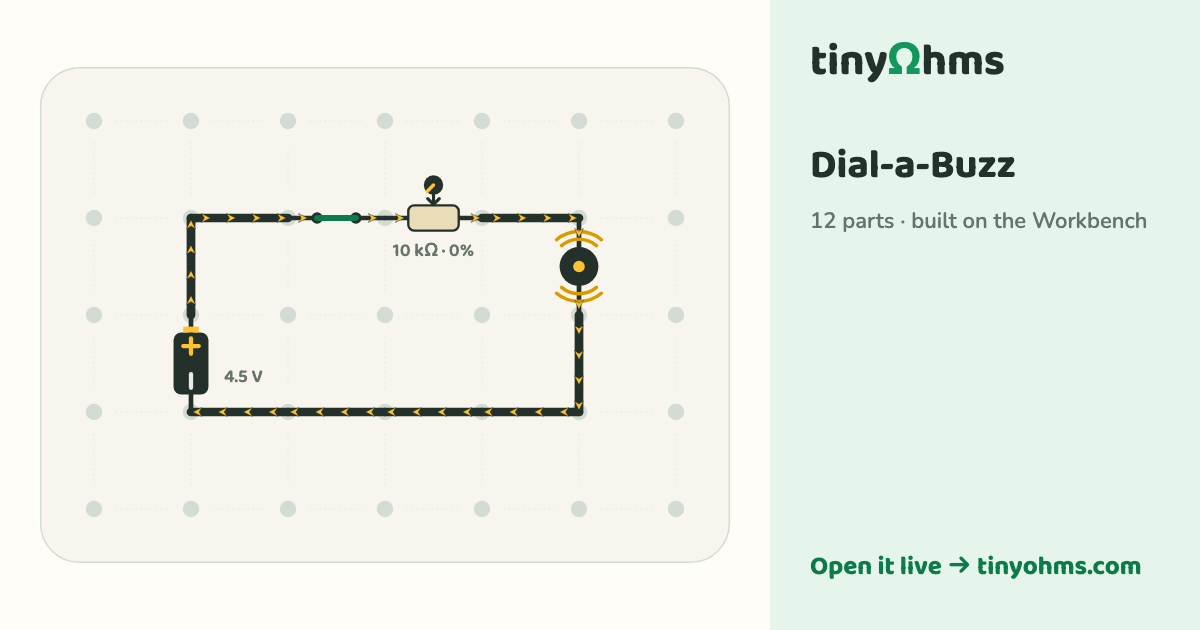 Dial-a-Buzz
Dial-a-Brightness for sound — one knob rides the buzzer between full alarm and library silence, with no button in the way.
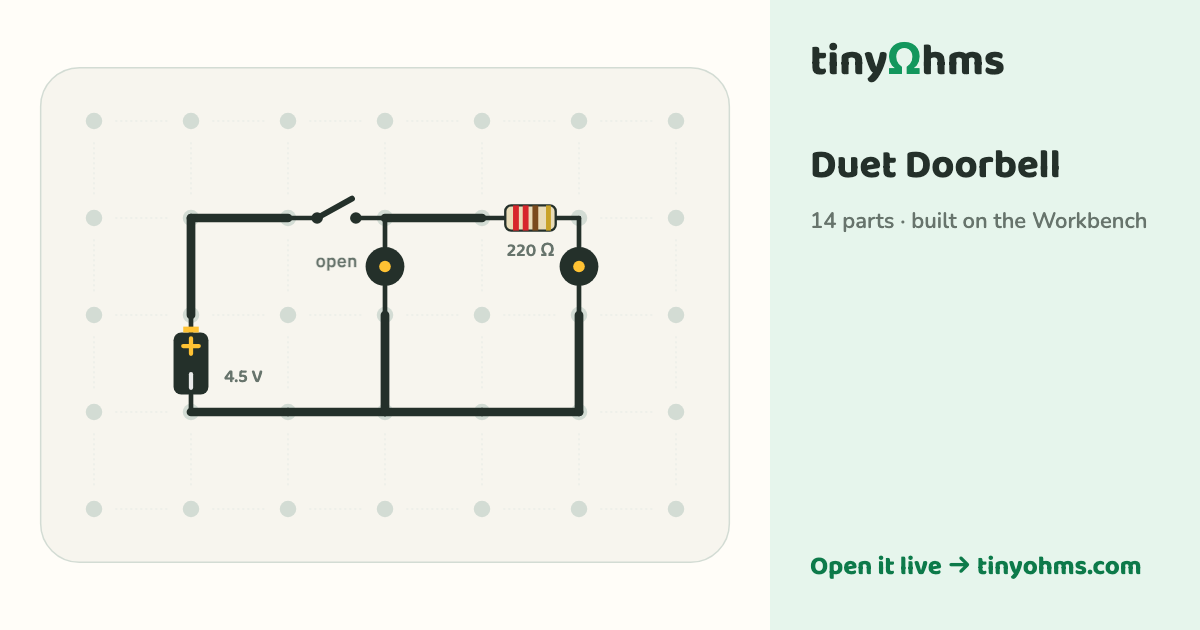 Duet Doorbell
One button, two buzzers in parallel — one wired direct at full 30 mA, one starved through a 220 Ω to about 12 mA — voicing together at two different loudnesses.
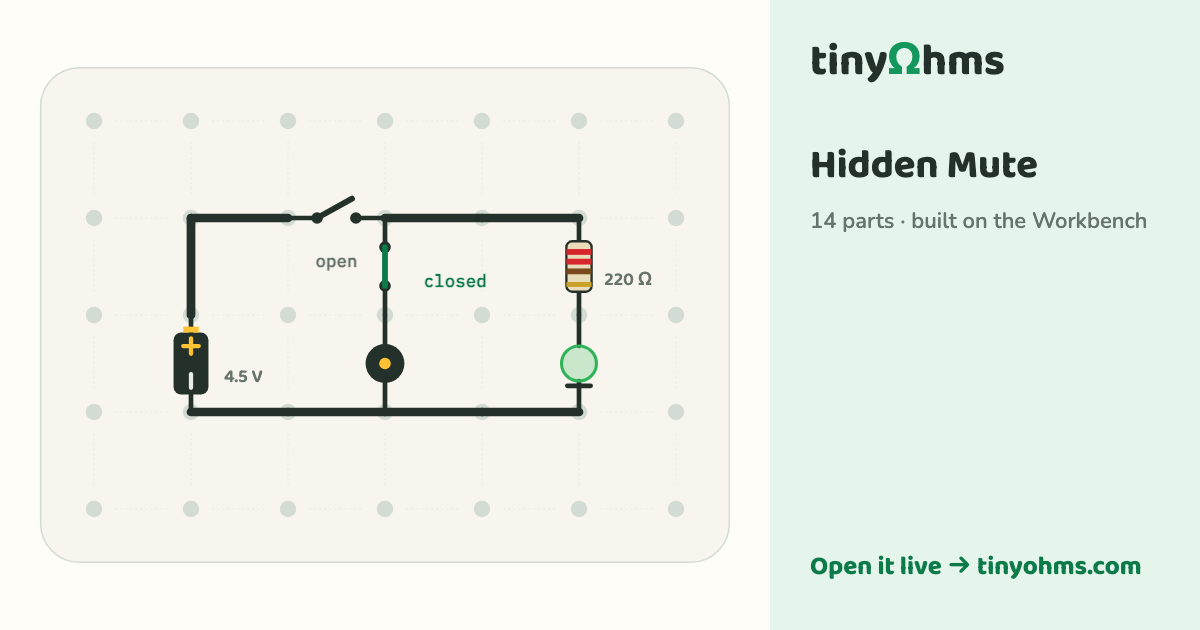 Hidden Mute
A doorbell with a secret slide switch tucked inside just the buzzer lane: flip it and the ring button still lights the LED, but the sound stays off.
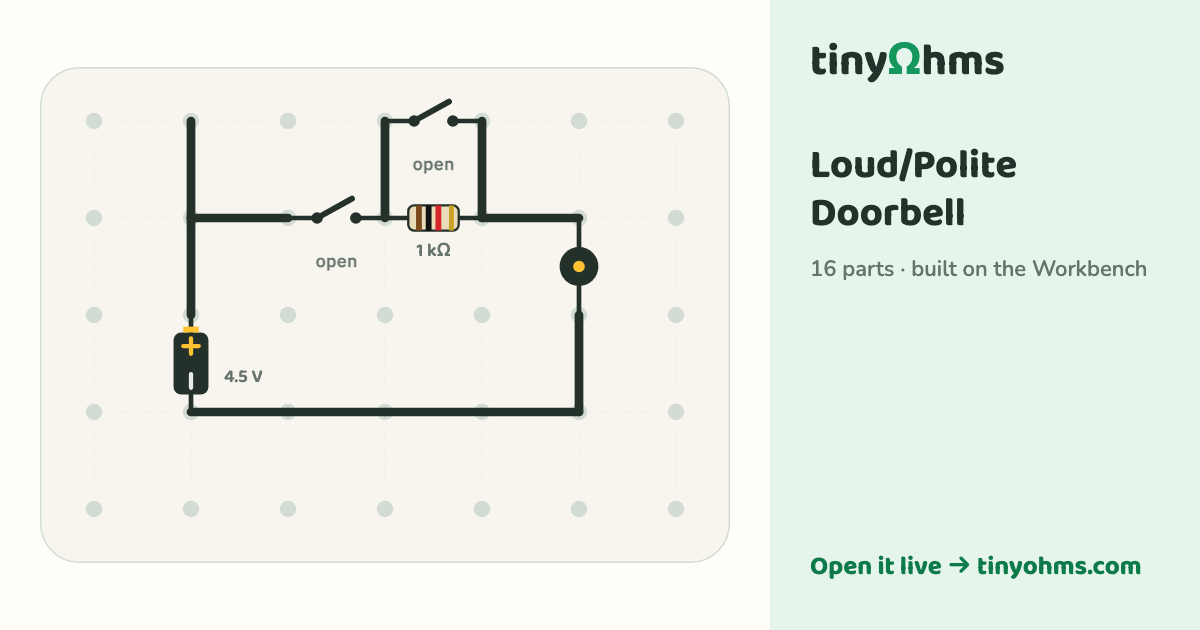 Loud/Polite Doorbell
One doorbell button, one buzzer, and a slide switch that shorts across a 1 kΩ resistor — flip it to swap between a startle-loud beep and a scratchy whisper.
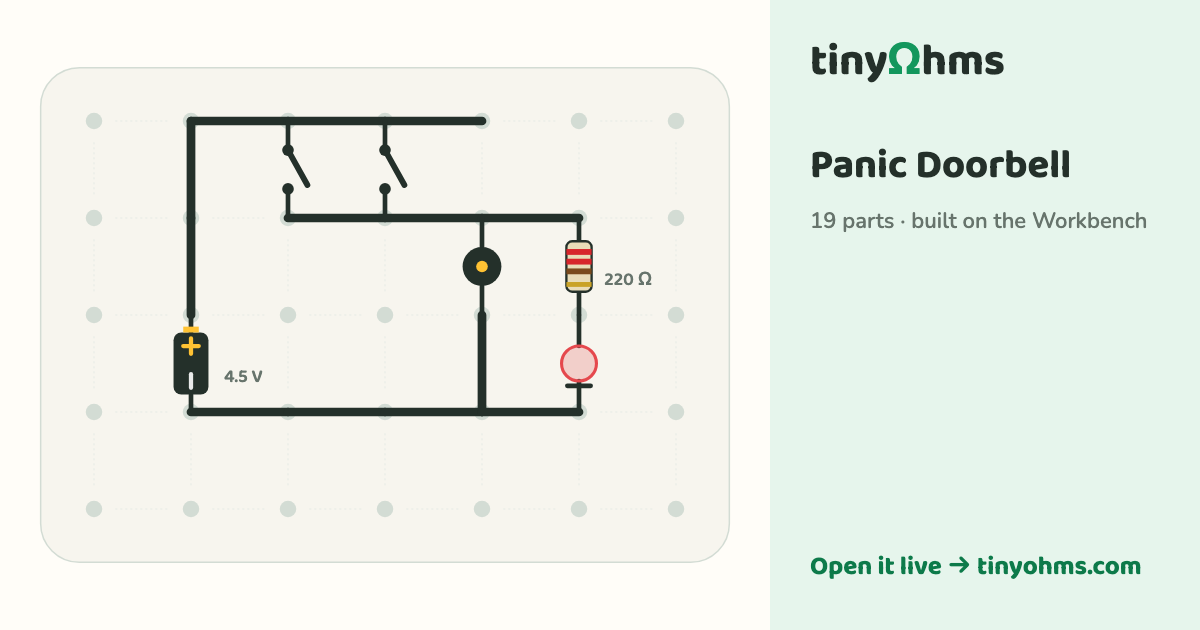 Panic Doorbell
Two buttons wired so either one fires the same buzzer and light — your first OR gate.
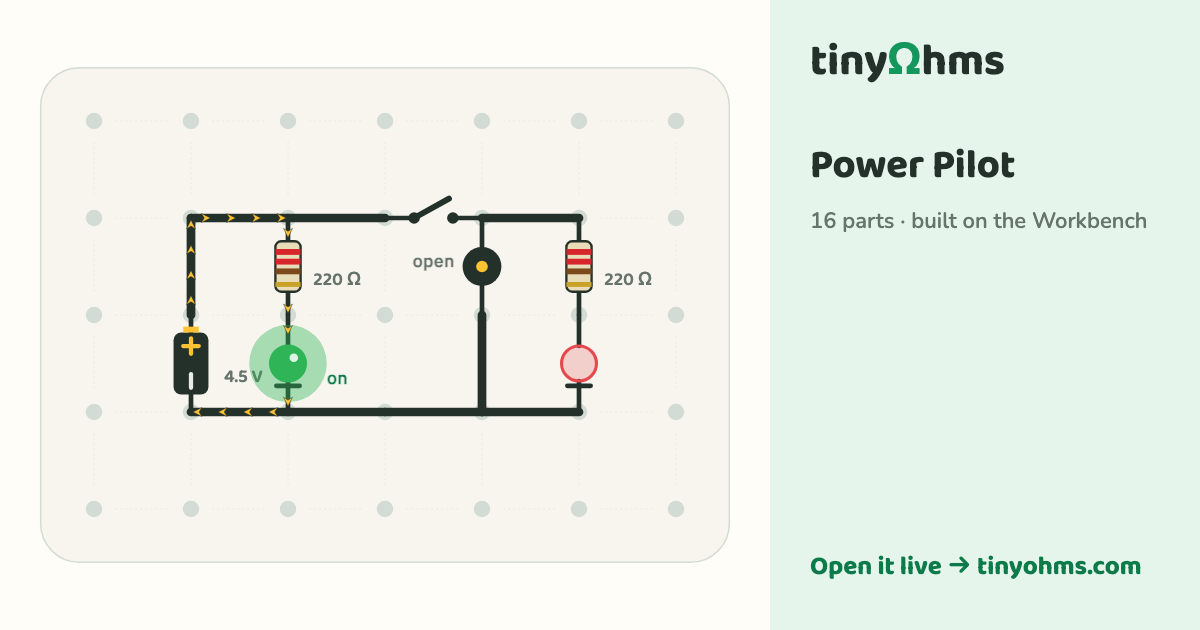 Power Pilot
A green pilot LED that glows the whole time the battery is plugged in, next to a red alarm LED and buzzer that only fire when the button is pressed.
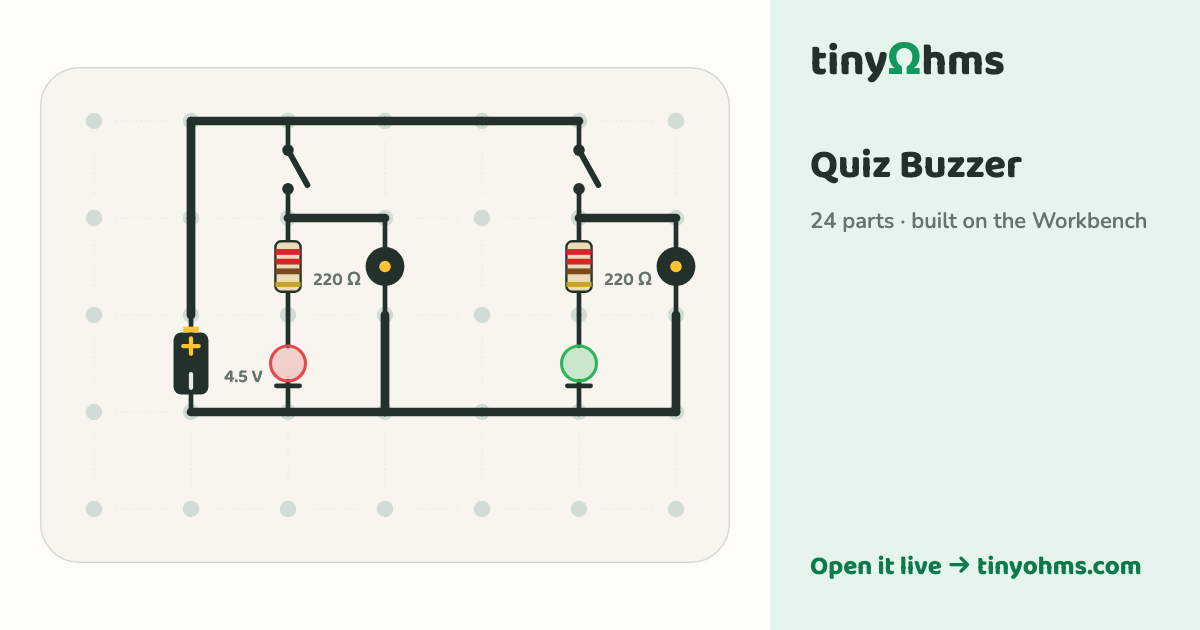 Quiz Buzzer
Two teams, two big buttons: yours lights your LED and rings your buzzer, theirs does the same on their side. Two independent doorbells sharing one battery.
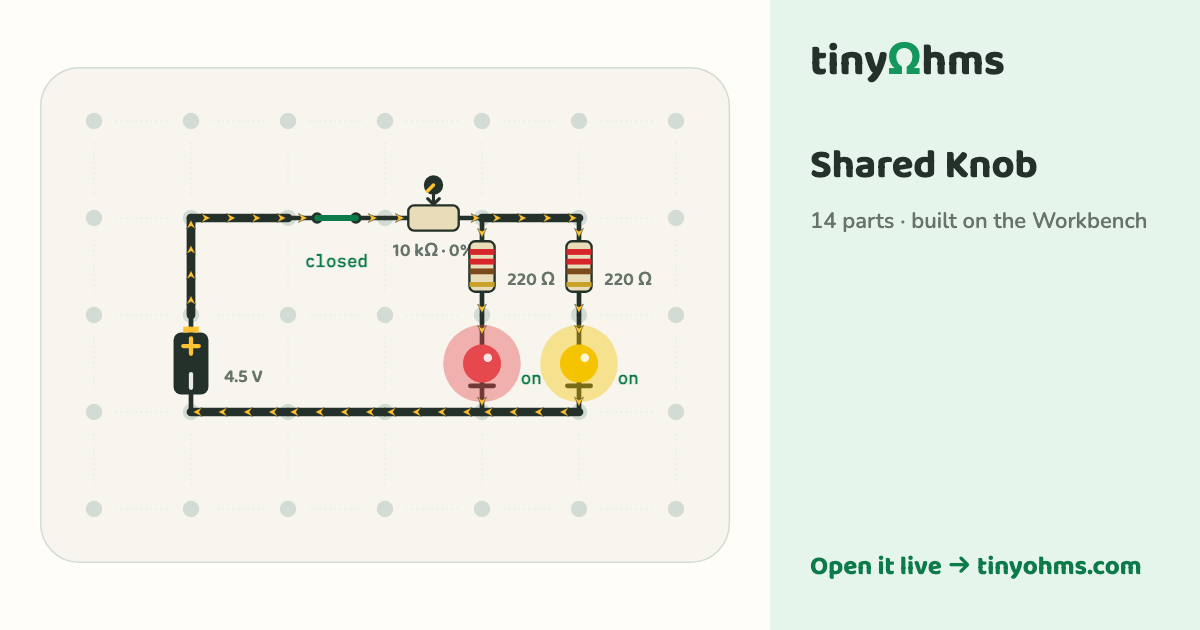 Shared Knob
One pot sits above the merge of two parallel LED lanes (red + yellow). Twist it and BOTH LEDs fade together — the knob throttles the shared rail.
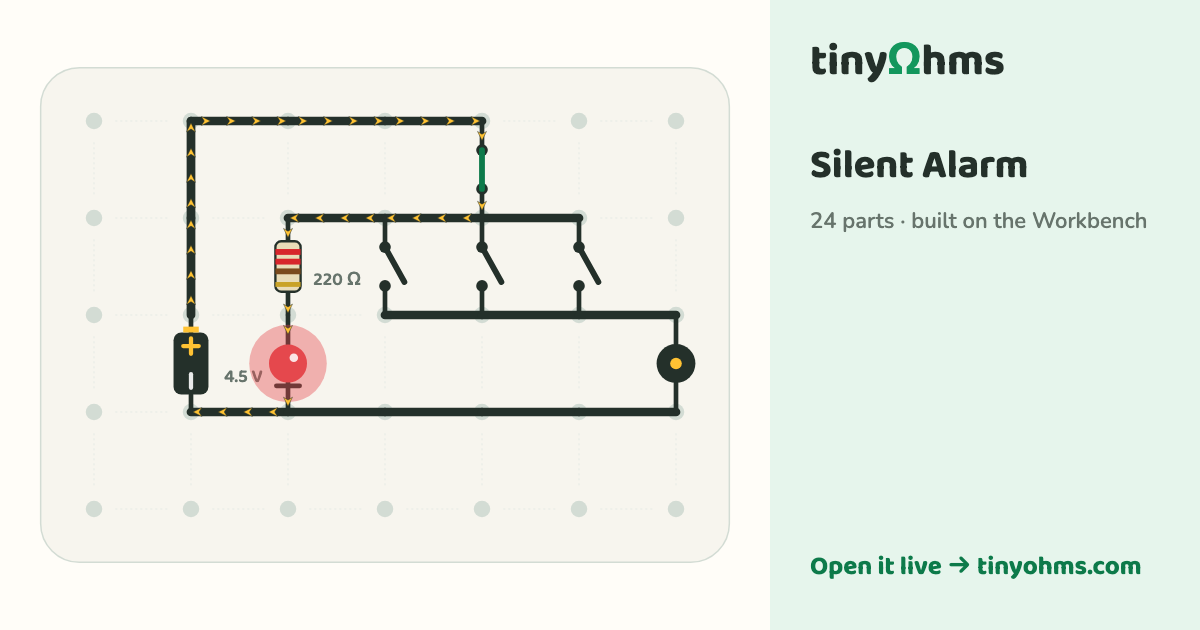 Silent Alarm
Three panic buttons wired in parallel, all inside an armed lane — any one of them fires the buzzer, and a small LED tells you the alarm is watching.
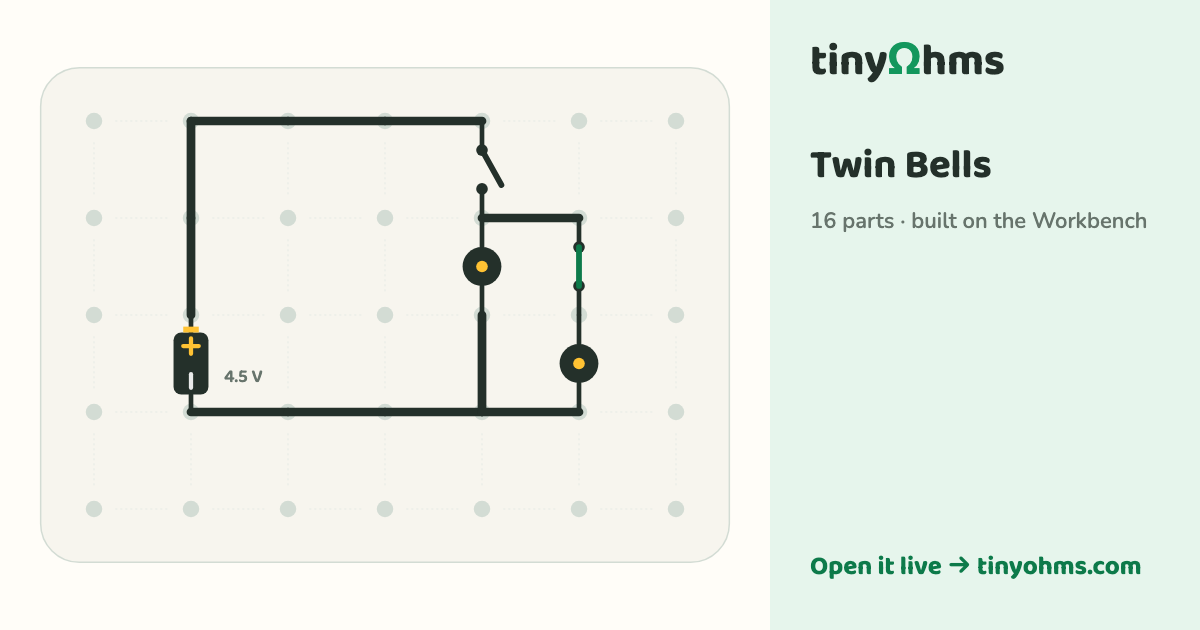 Twin Bells
One doorbell button rings two buzzers in parallel — one in your room, one in the kitchen — with a slide switch that mutes just the bedroom bell at night.
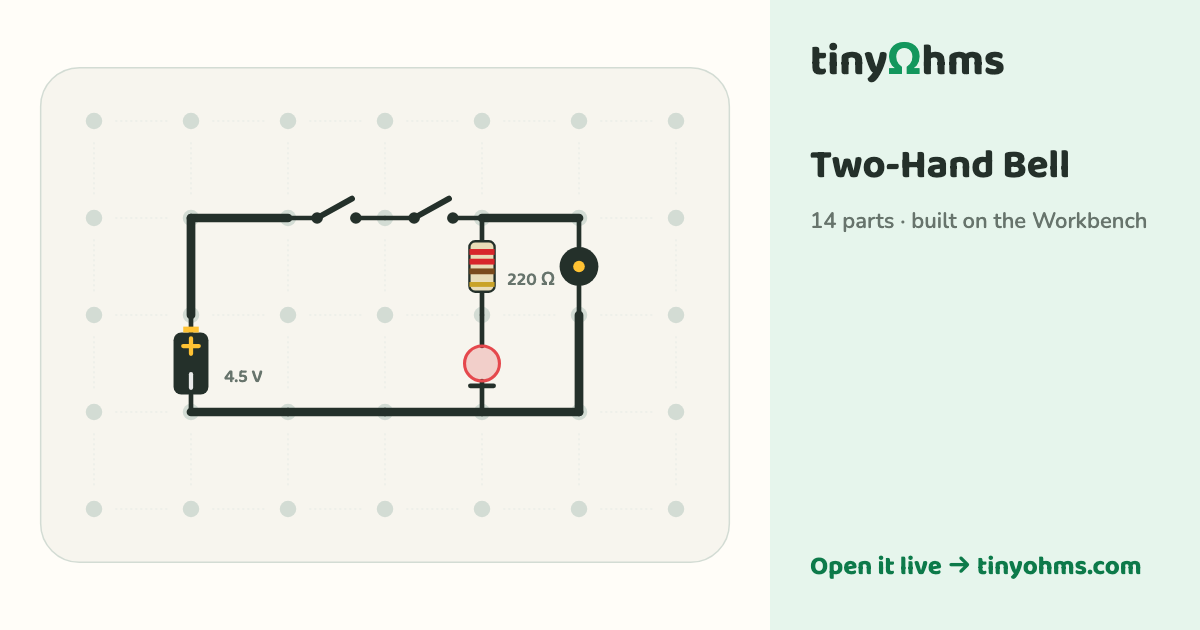 Two-Hand Bell
Two push buttons in series feeding a buzzer and an LED — both hands must stay pressed for the alarm to sound.
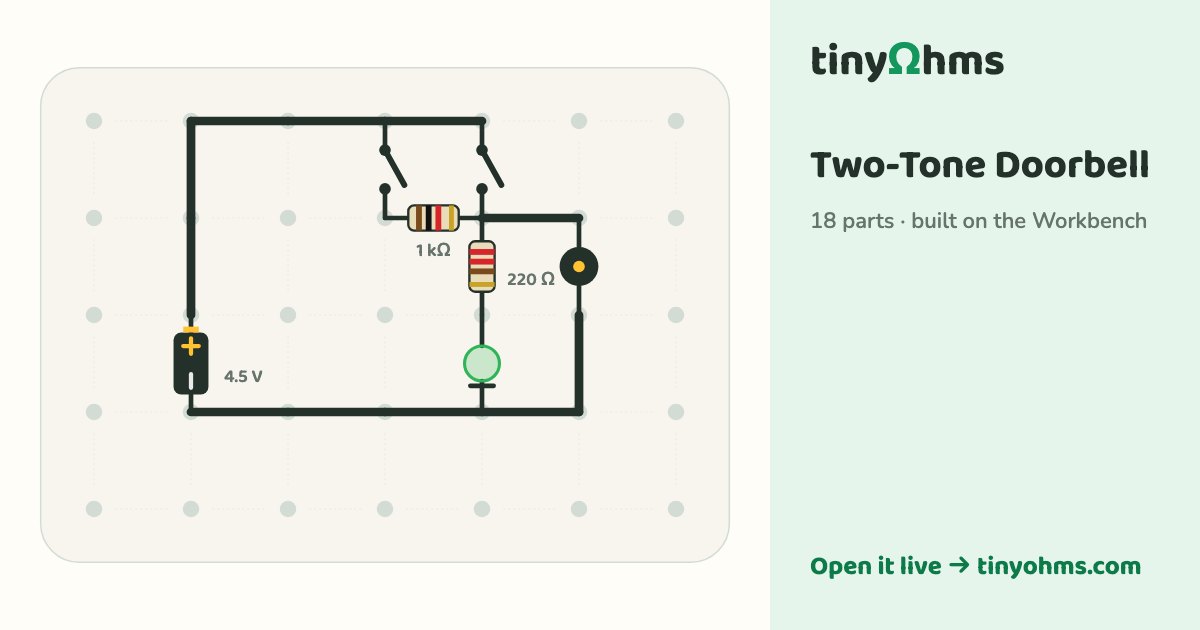 Two-Tone Doorbell
Two call buttons, one doorbell: LOUD rings the buzzer and lights the porch LED; QUIET starves the buzzer and shows why it can't just be dimmed.
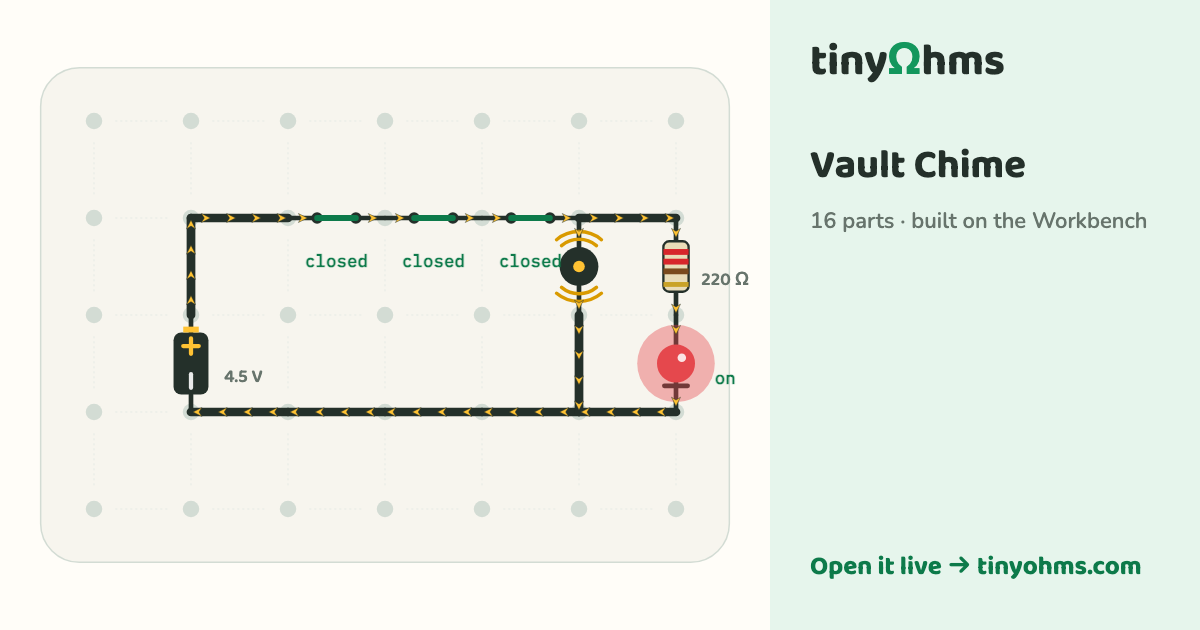 Vault Chime
Three slide switches in a line, a buzzer and a red LED hanging off the end — the chime only sings and glows when every single switch is closed.
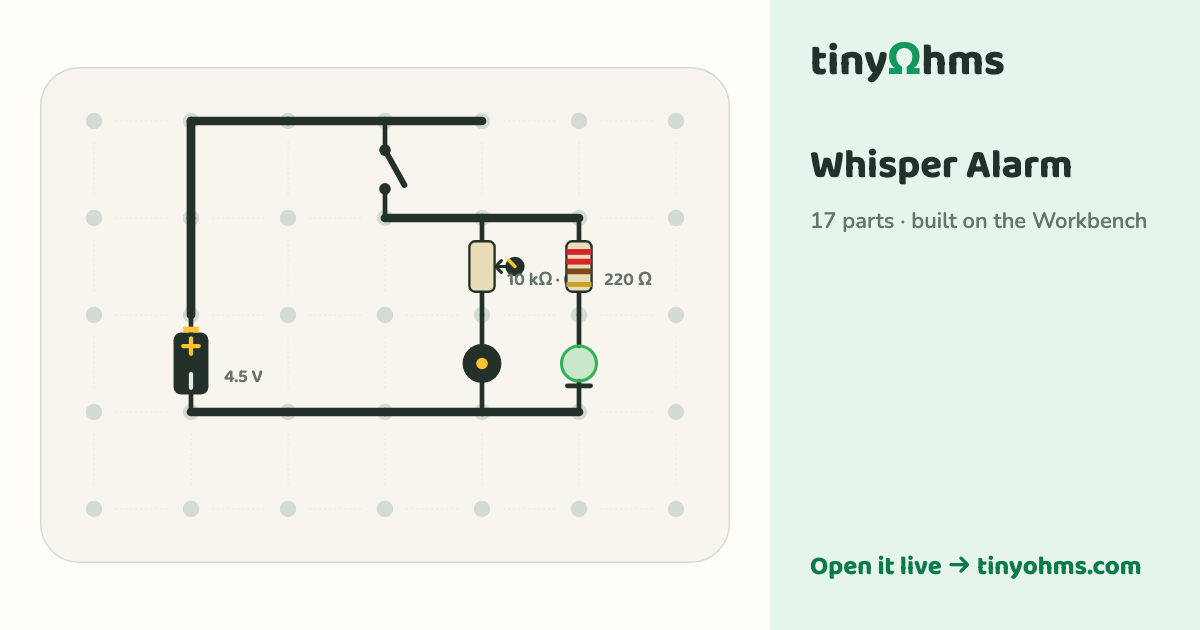 Whisper Alarm
A doorbell with a volume knob — the pot lives in the buzzer lane, so twisting it changes the beep without touching the light.
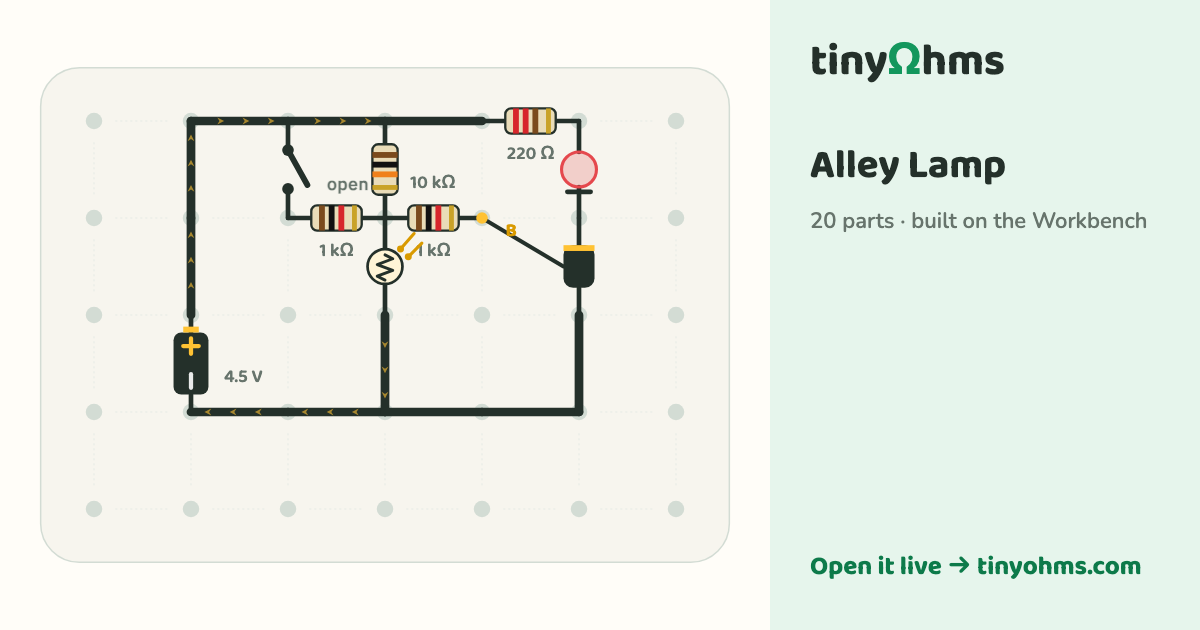 Alley Lamp
Automatic Night Light with a push-button override. Dark room OR button press fires the lamp — a wired-OR built straight onto the transistor's base.
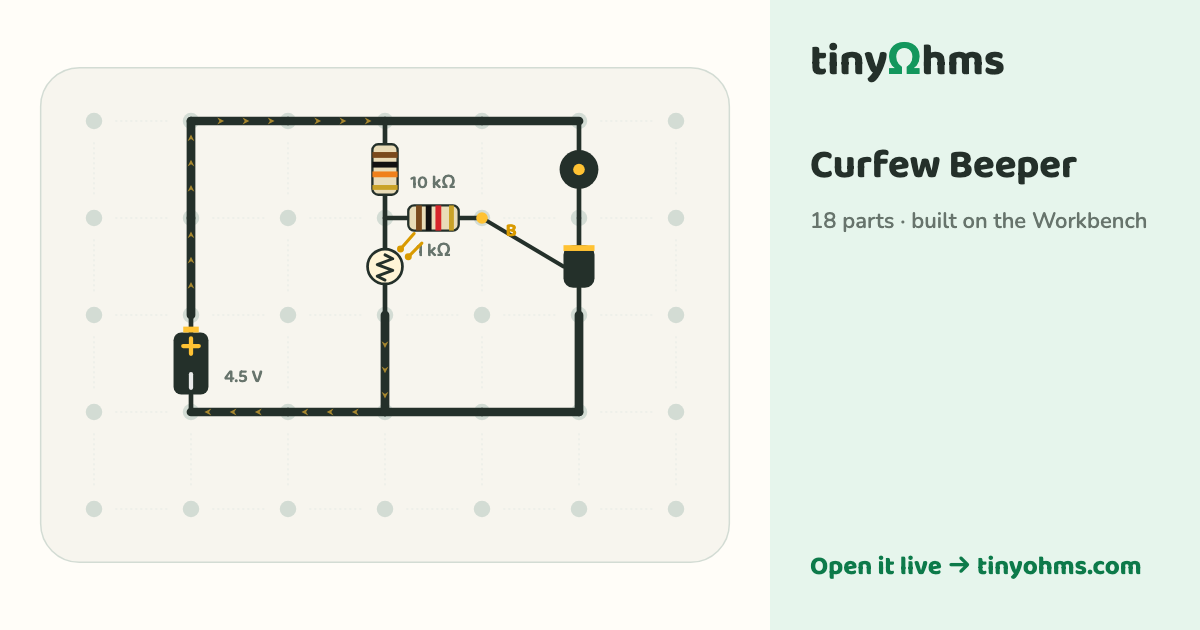 Curfew Beeper
The Automatic Night Light's brain with a buzzer where the LED used to sit — beeps the moment the room goes dark, so you never miss sunset.
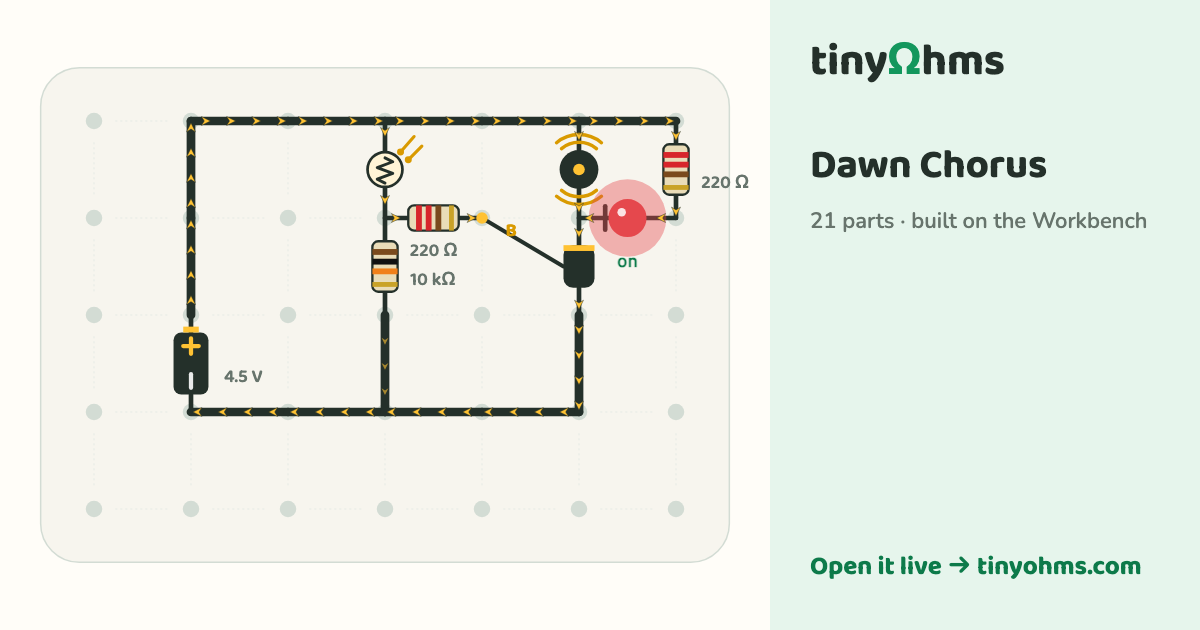 Dawn Chorus
Cookie Jar Alarm with a red LED added in parallel with the buzzer — one light sensor drives a chime and a lamp the moment the sun hits.
 Dusk Chorus
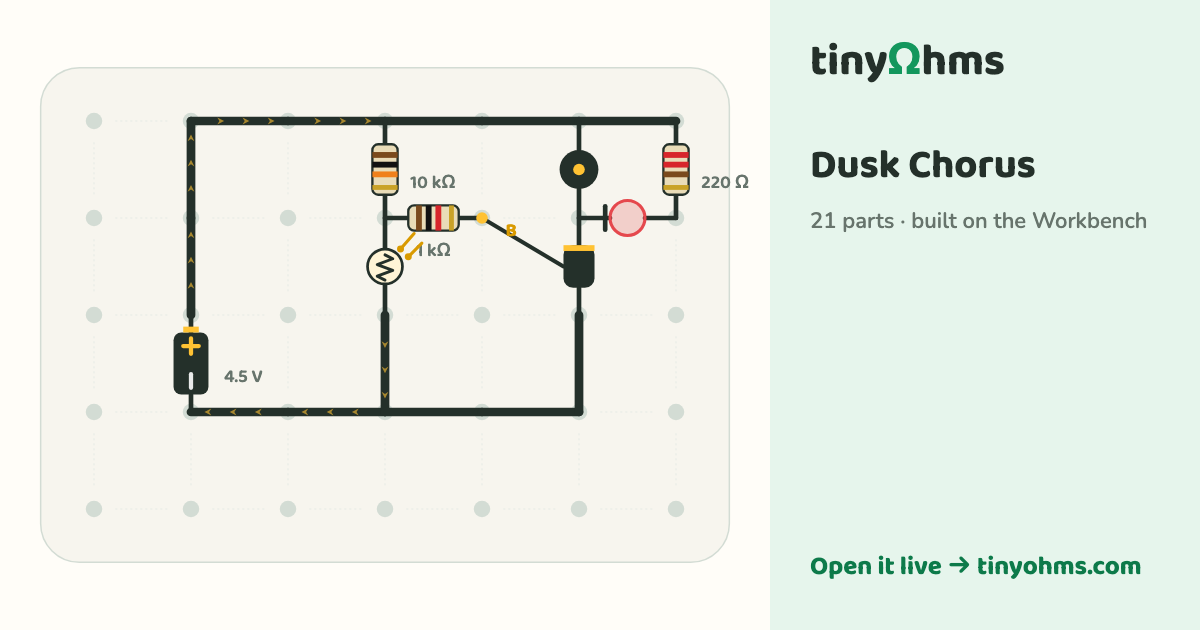
The Curfew Beeper with a red LED wired in parallel with the buzzer — one dusk sensor drives a chime and a lamp at the same time.
 Fever Beeper
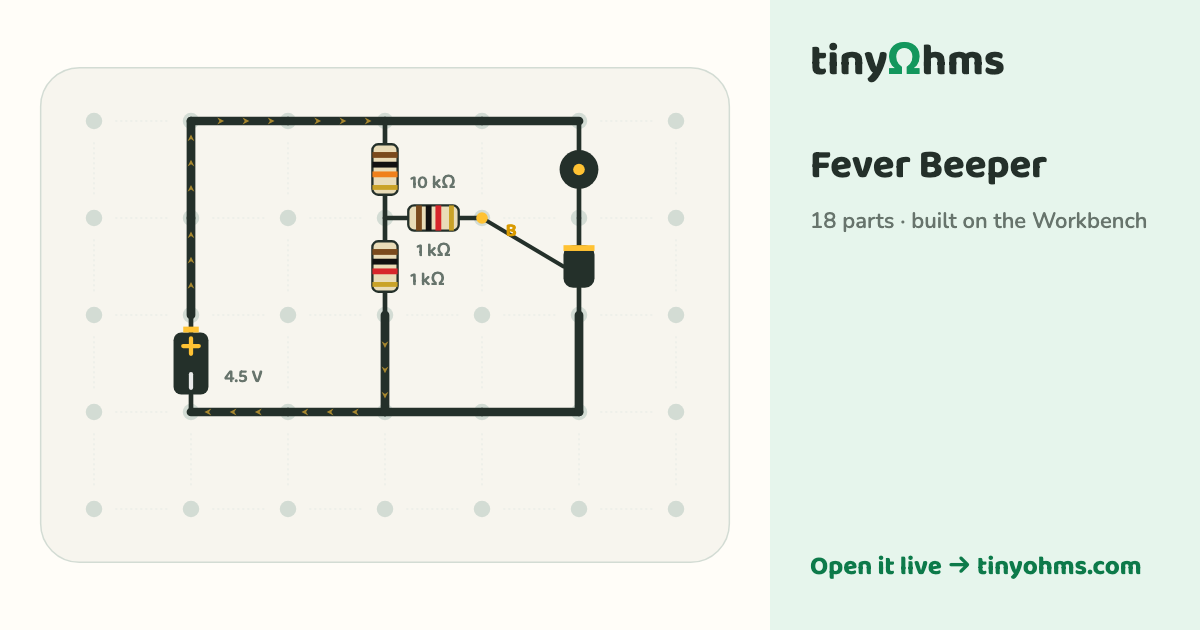
The Warm Hand Alarm's brain wired to a buzzer instead of a lamp — silent in a normal room, beeping the second a warm palm covers the sensor.
 Night Doorbell
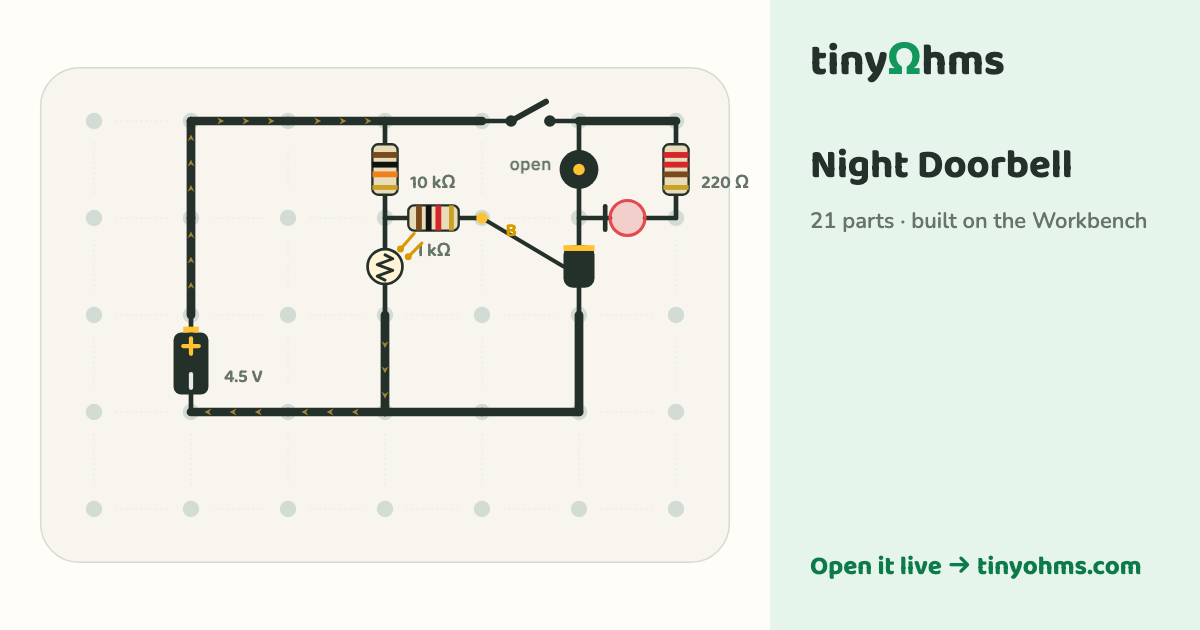
A doorbell that only works at night. The ring button fires buzzer and LED together — but only once the LDR sees darkness. In daylight the button does nothing.
 Reading Light
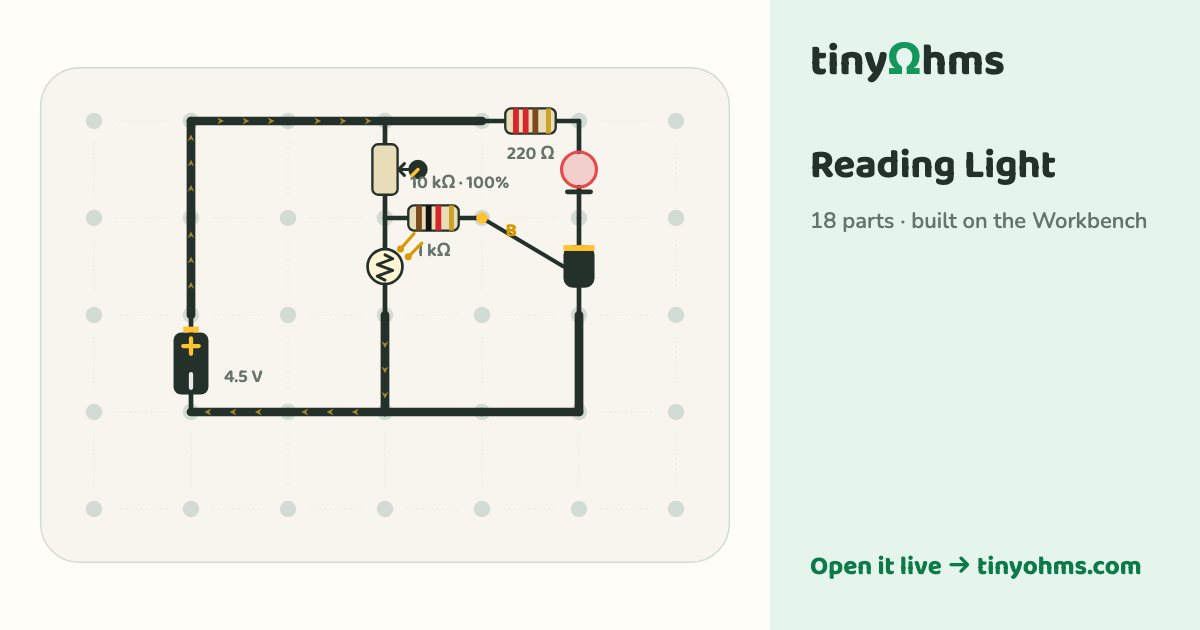
The Automatic Night Light with a knob on top — turn it to dial in how dark the room has to get before the lamp fires. Your first tunable threshold.
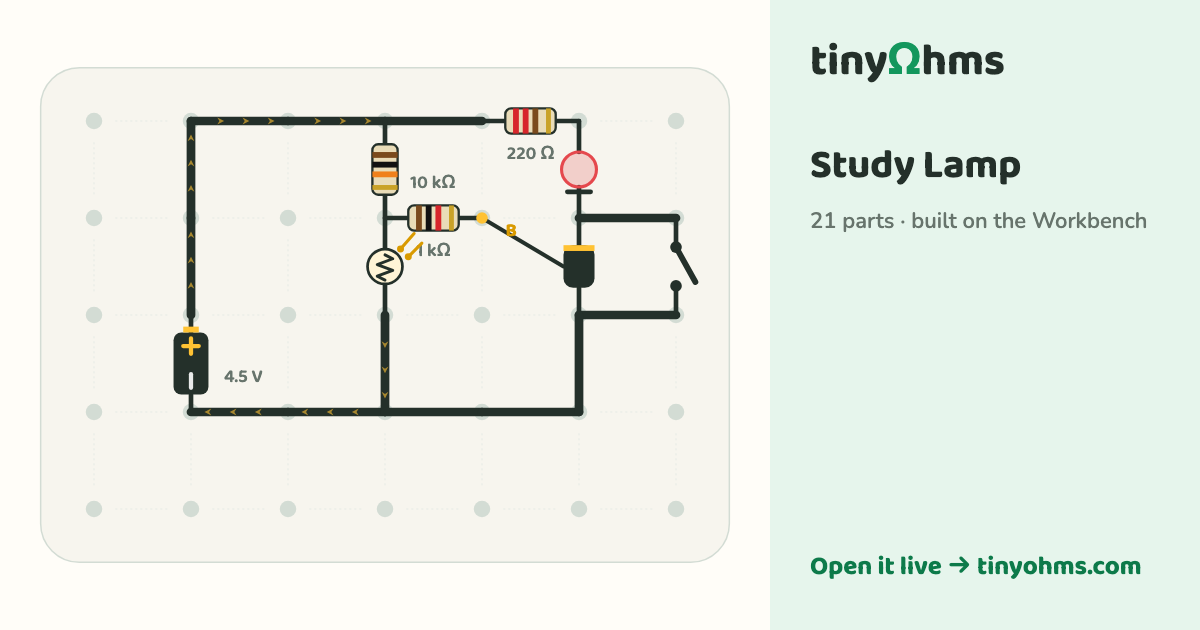 Study Lamp
The Automatic Night Light with a force-on override — flip the slide switch and the lamp stays lit even in daylight, ignoring the sensor.
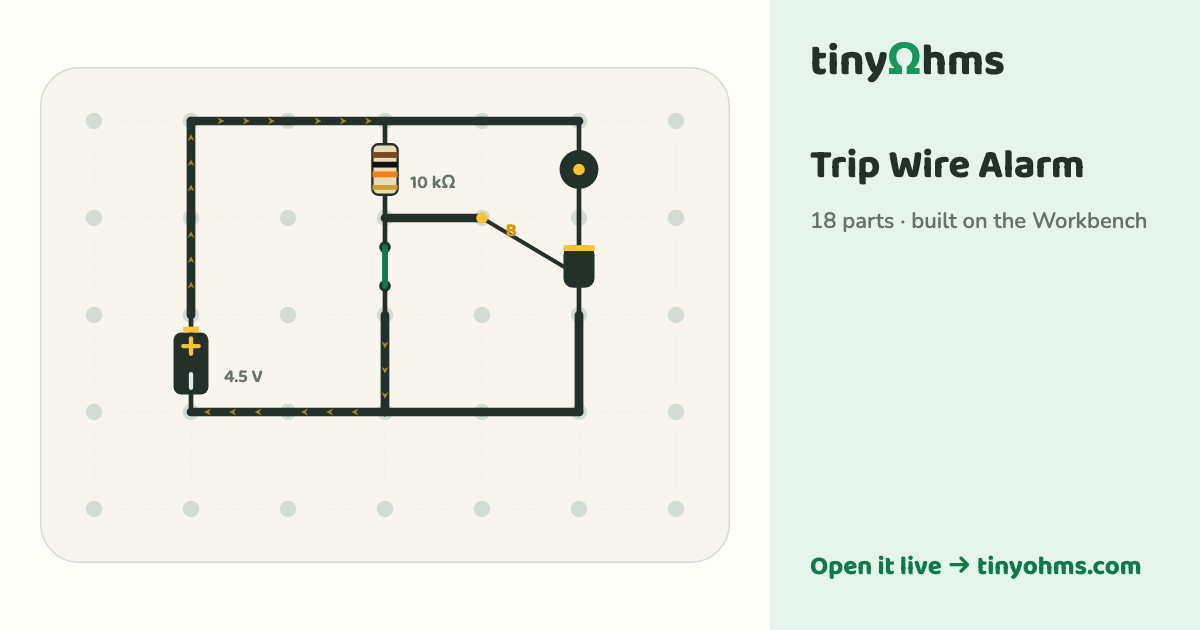 Trip Wire Alarm
A thin wire across a doorway holds the alarm silent. Break the wire and the buzzer screams — until you connect it back.
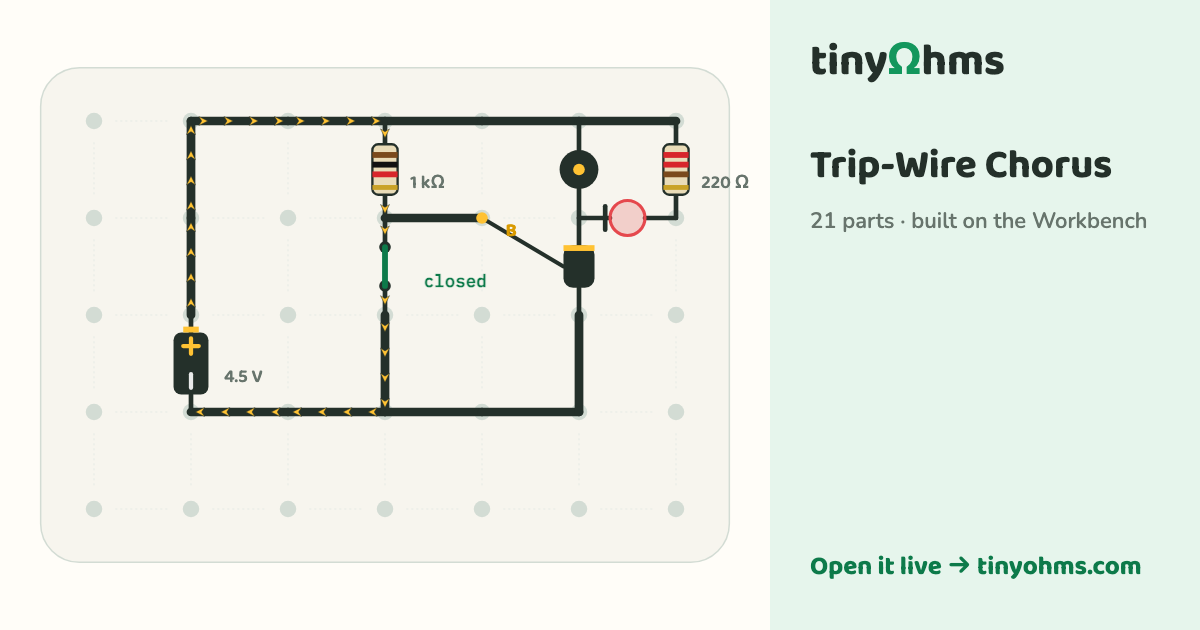 Trip-Wire Chorus
Trip Wire Alarm with a red LED added in parallel with the buzzer — one thin wire holds the whole chorus silent; snap it and both mouths fire.
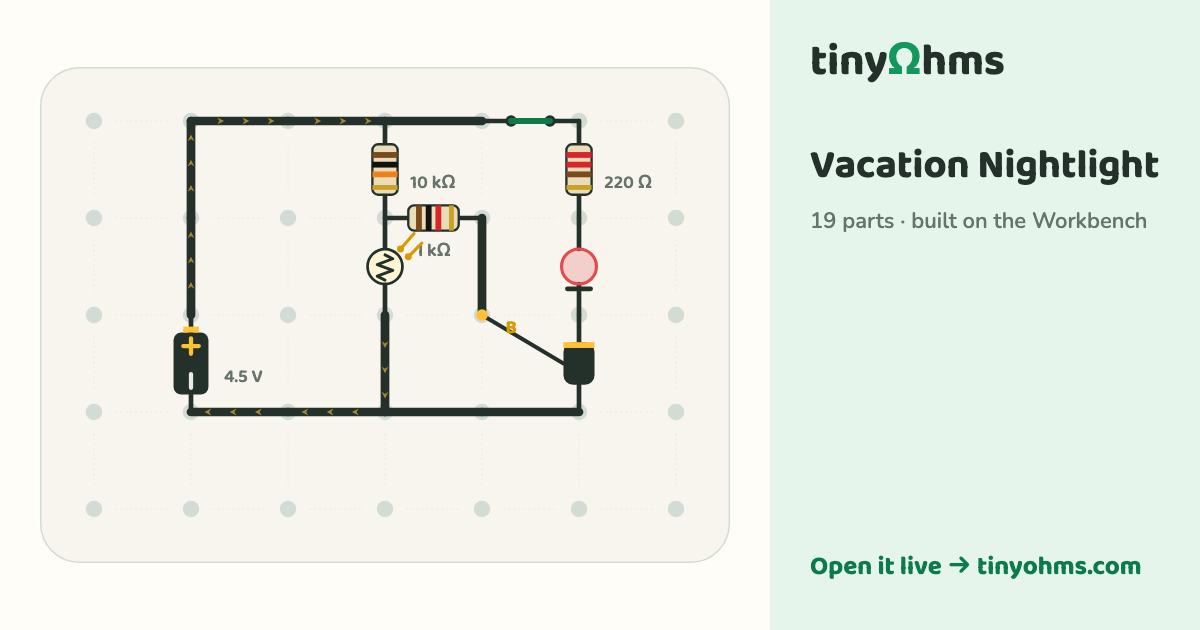 Vacation Nightlight
The Automatic Night Light with a manual override — flip the slide switch off and the lamp stays dark even in a pitch-black room.
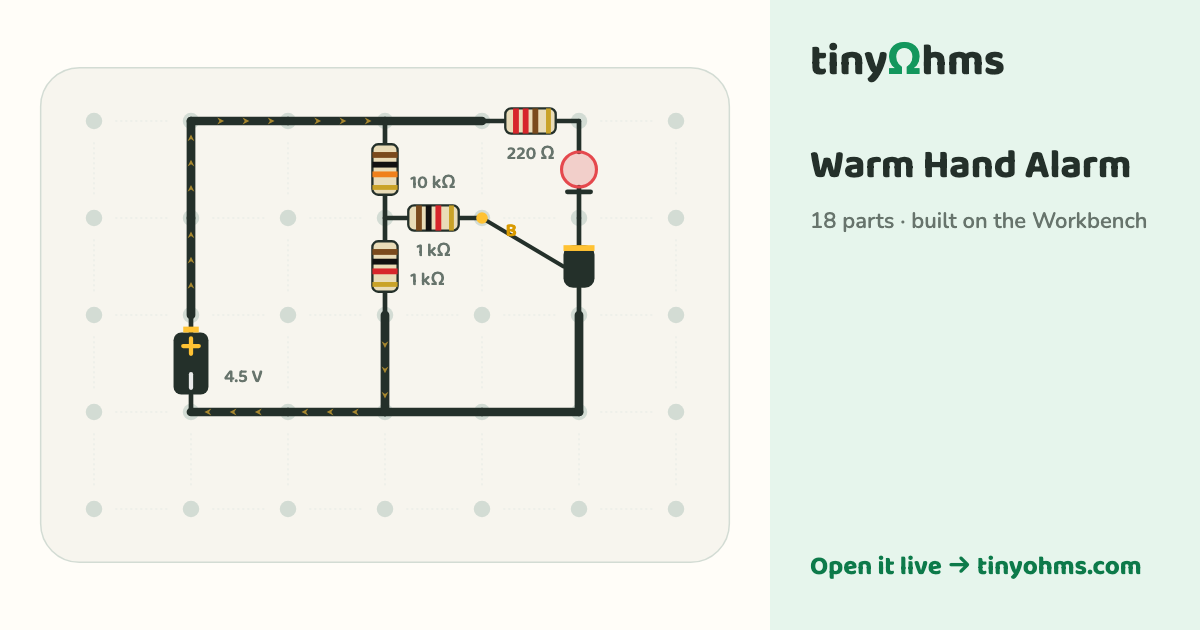 Warm Hand Alarm
Cup your hand over the sensor and the LED lights up — a thermometer that turns into a switch.
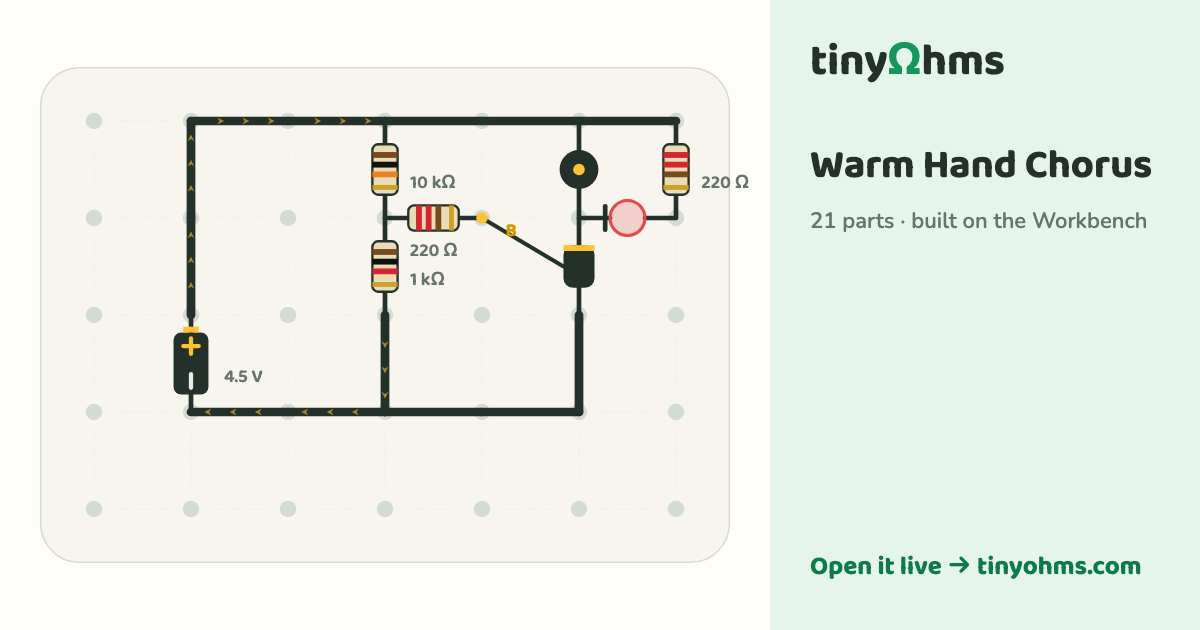 Warm Hand Chorus
Fever Beeper with a red LED added in parallel with the buzzer — one warm-hand sensor drives a chime and a lamp at the same time.
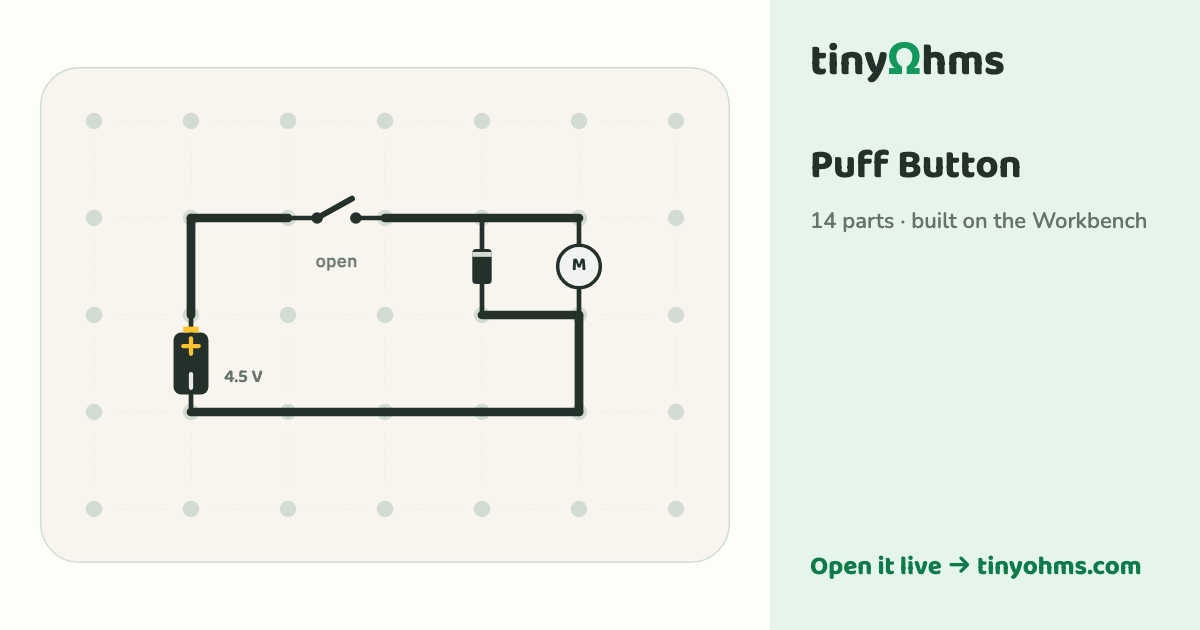 Puff Button
First Spin with the slide swapped for a push button. Press for a spurt of breeze, let go and it stops — a dust puffer for a keyboard or camera lens.
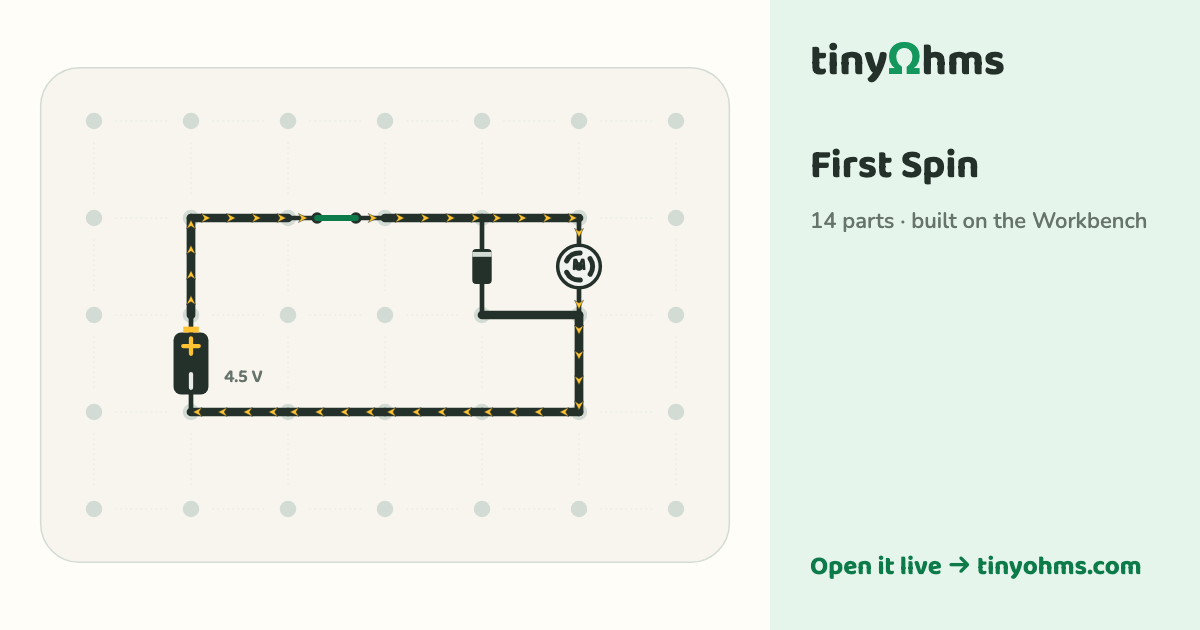 First Spin
Your first motor. A switch, a coil, and a diode that catches the voltage kick when the current stops.
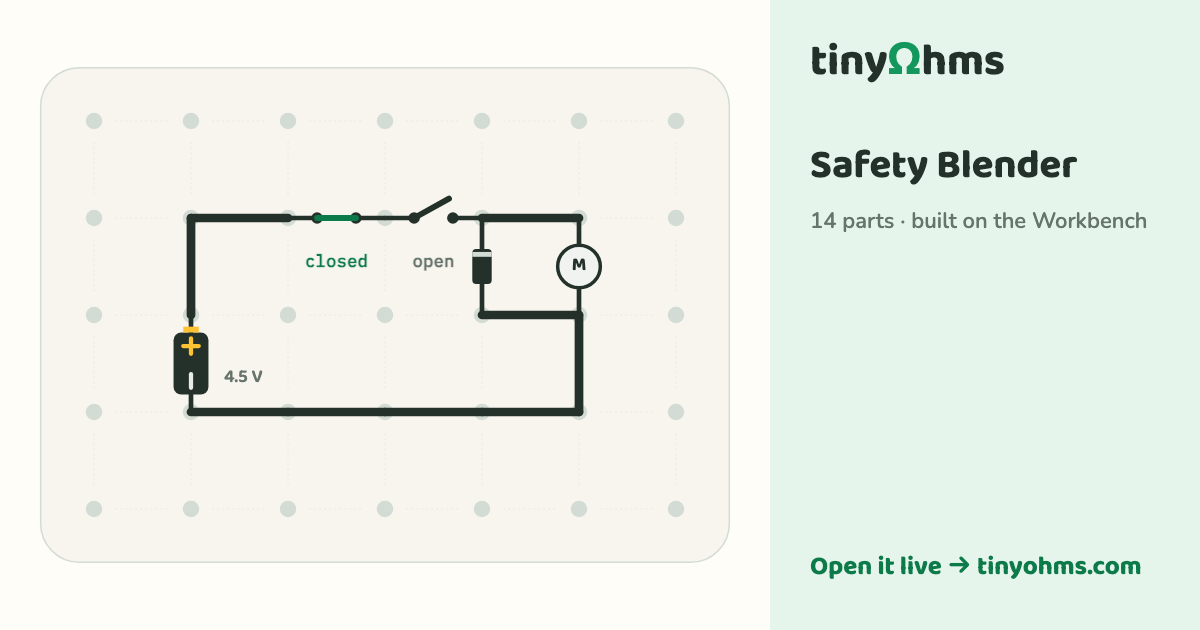 Safety Blender
A slide lid switch and a push run button, both in series with the motor. Fan only spins when the lid is on AND your finger is on the button.
 Dial-a-Spin
Dial-a-Brightness with a motor instead of an LED. Twist the knob and watch the fan speed slide from full spin to a slow crawl.
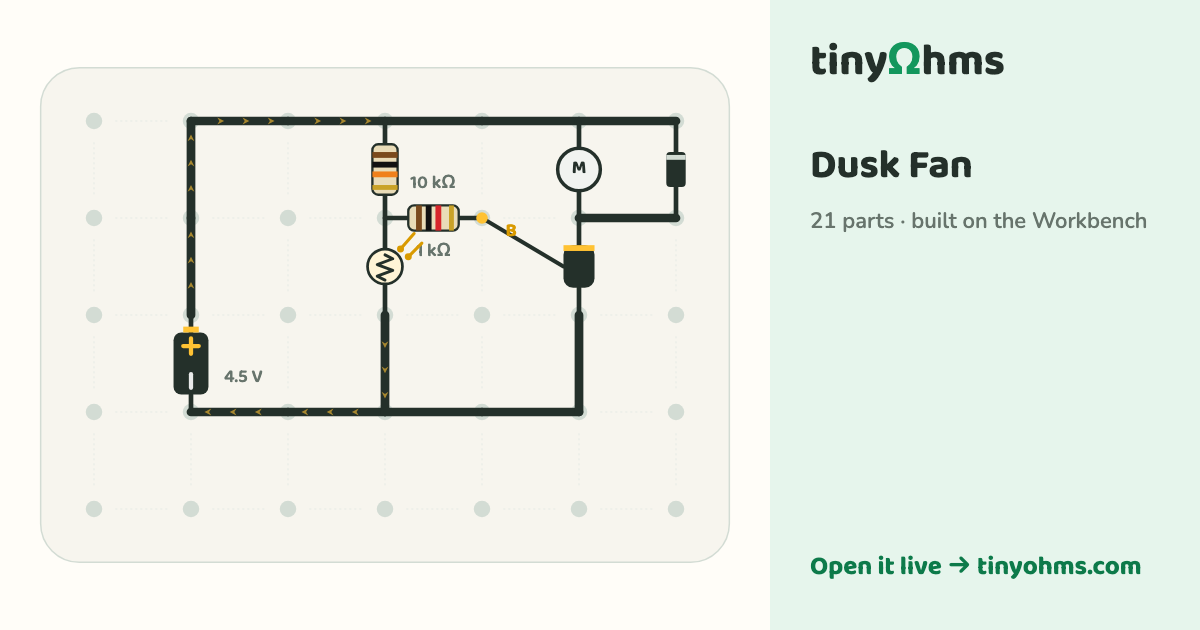 Dusk Fan
Sunrise Fan's mirror image — the room gets DARK and the fan spins. A bedside cooling breeze that starts as the lights go out.
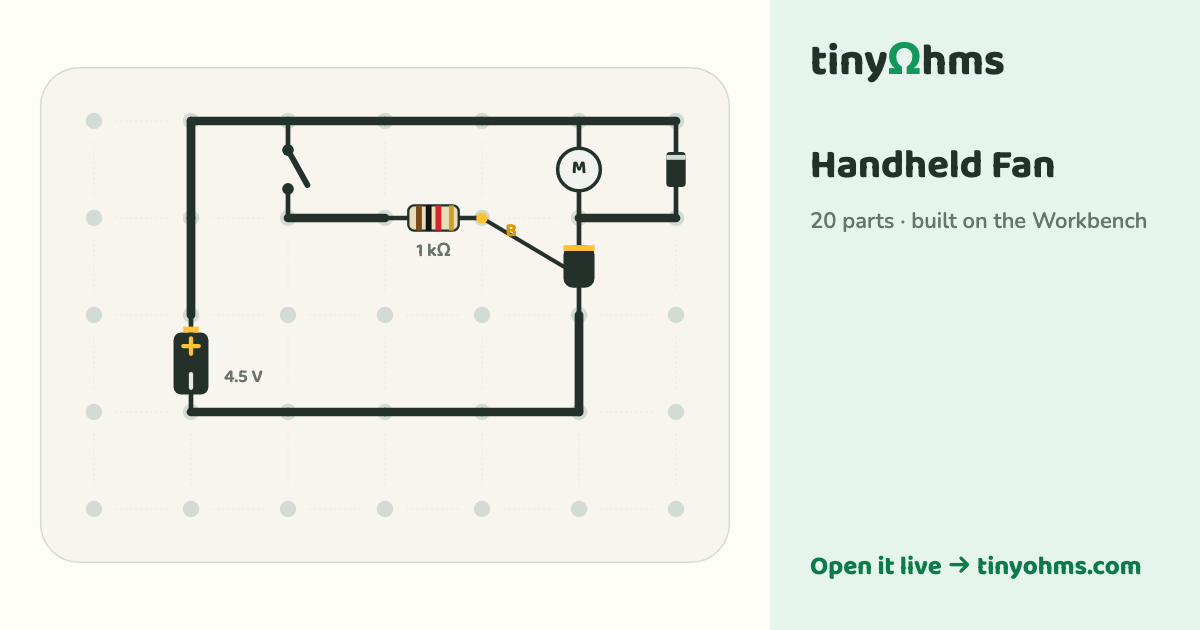 Handheld Fan
Press the button, the fan spins. A tiny finger current commands a hundred-milliamp motor through a transistor.
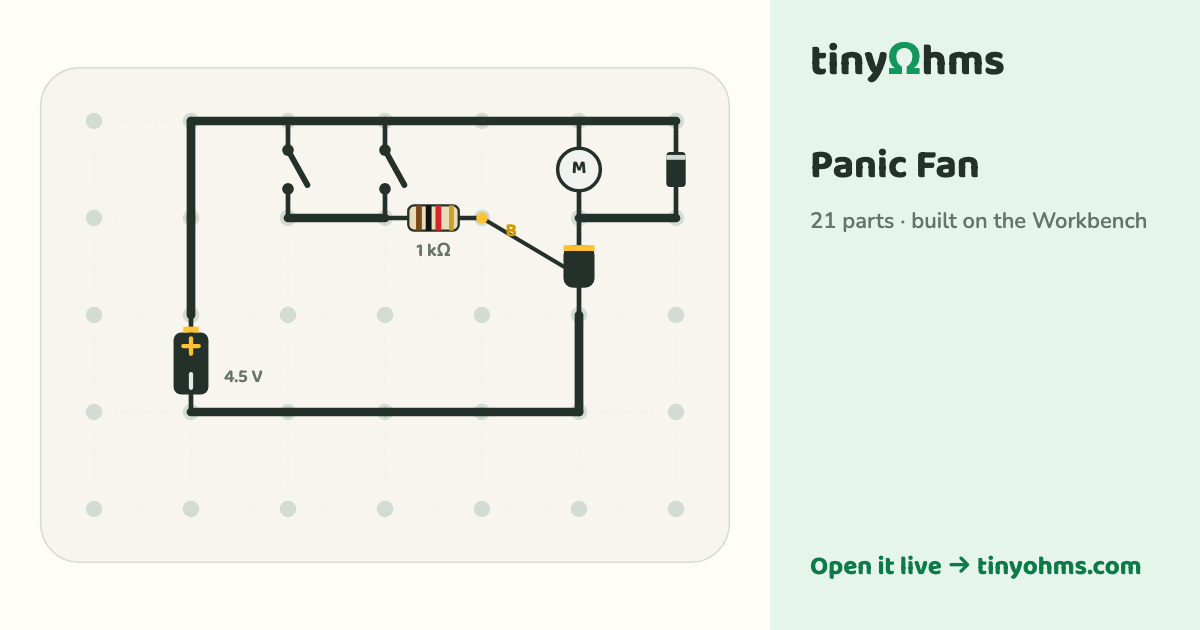 Panic Fan
Two buttons, either one fires the fan. Panic Doorbell wearing a motor — an OR gate that spins.
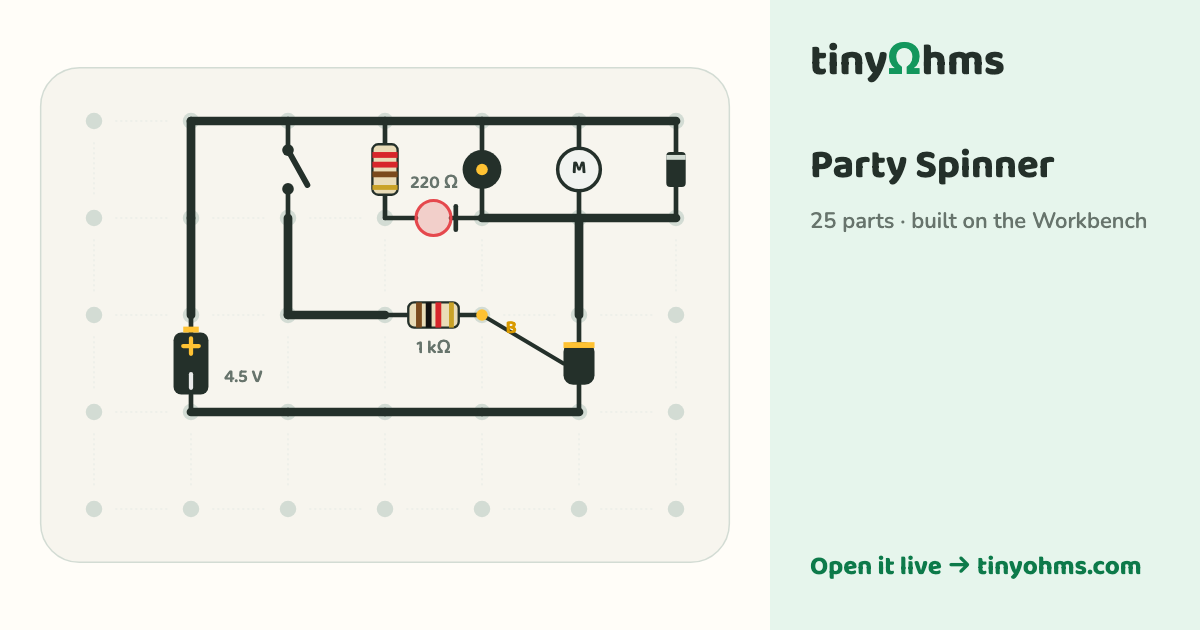 Party Spinner
One button, three mouths: a spinning motor, a red LED, and a buzzer all fire together. One transistor drives them all.
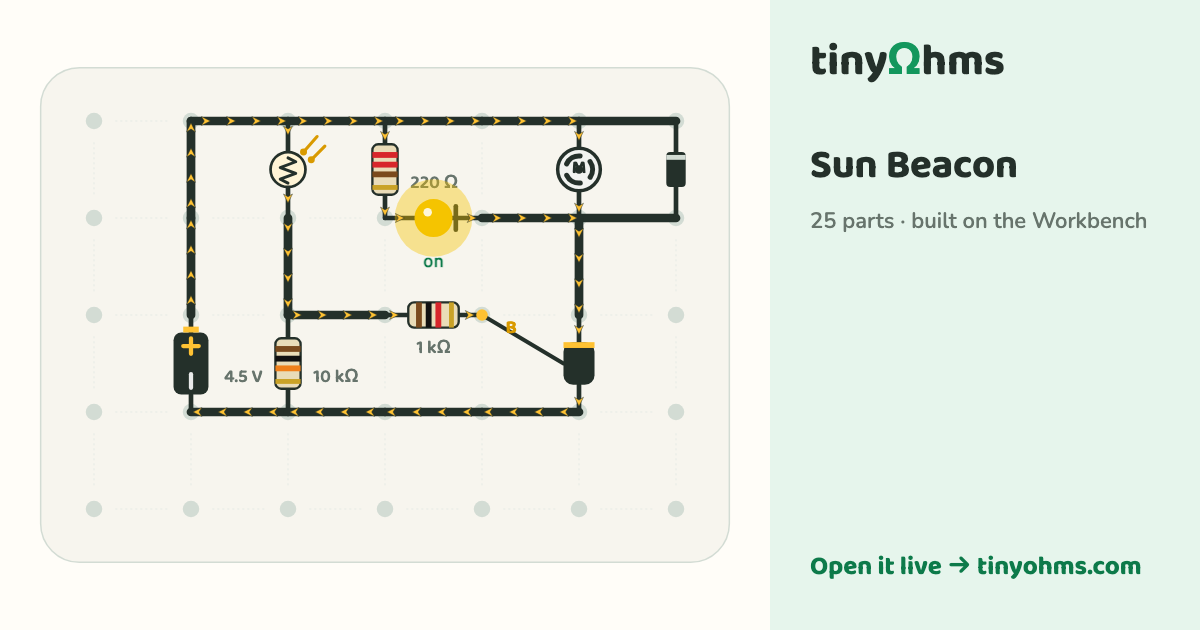 Sun Beacon
Sunrise Fan with a second lane — a yellow LED lights and a motor spins together the moment daylight hits the sensor. One brain, two mouths.
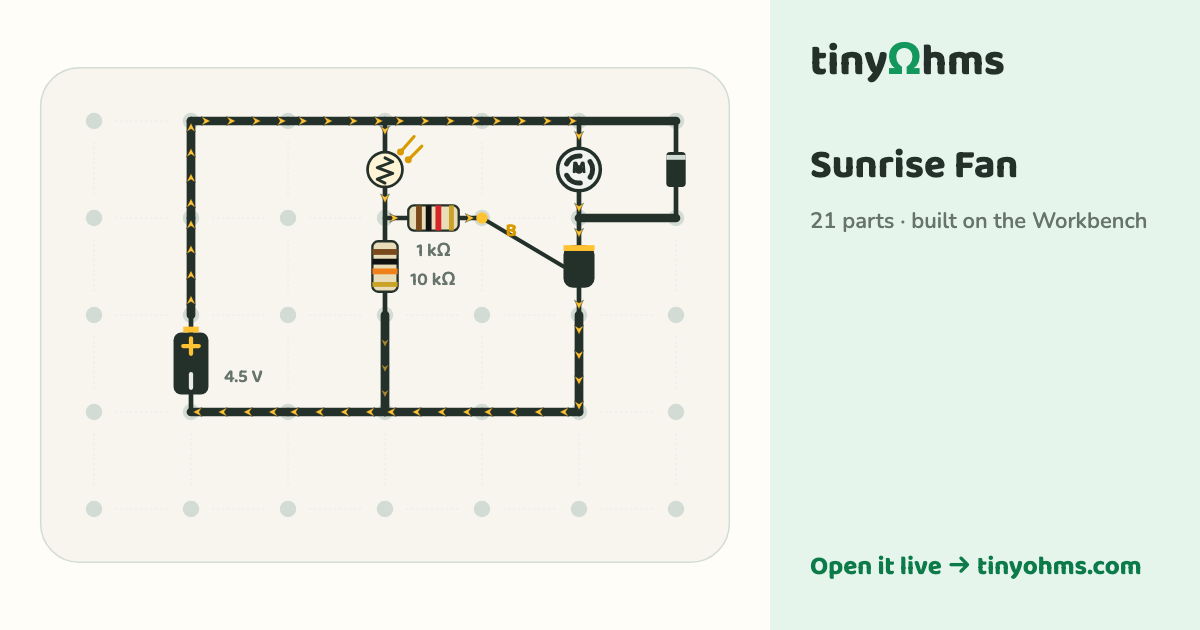 Sunrise Fan
Sunrise Alarm with the LED swapped for a motor. The sun rises, the fan starts — an automatic wake-you-up desk breeze.
 Trip Wire Fan
Trip Wire Alarm's brain wearing a motor. The wire is intact — the fan is silent. Snap it — the fan spins as the alarm.
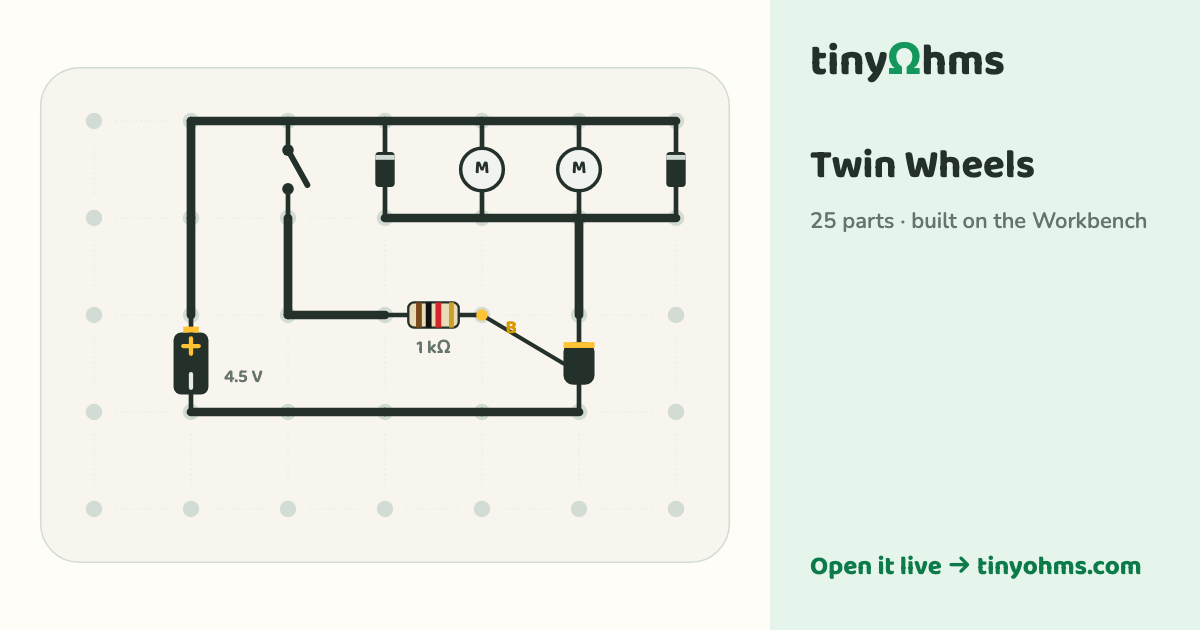 Twin Wheels
Two motors from one button — a Level 9 robot drivetrain, five levels early.
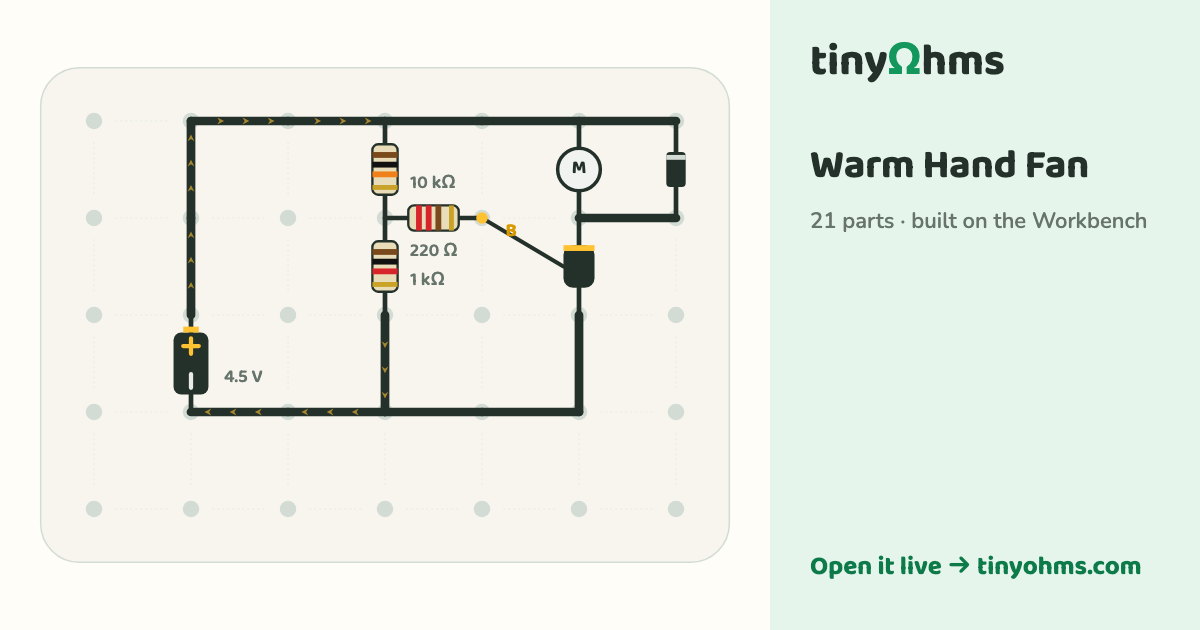 Warm Hand Fan
A little desk fan that starts when you cup your palm over the sensor. Warm-Hand Alarm's brain, motor mouth.